Yoga mats: thickness, grip, and why the cheap mat slips when you sweat
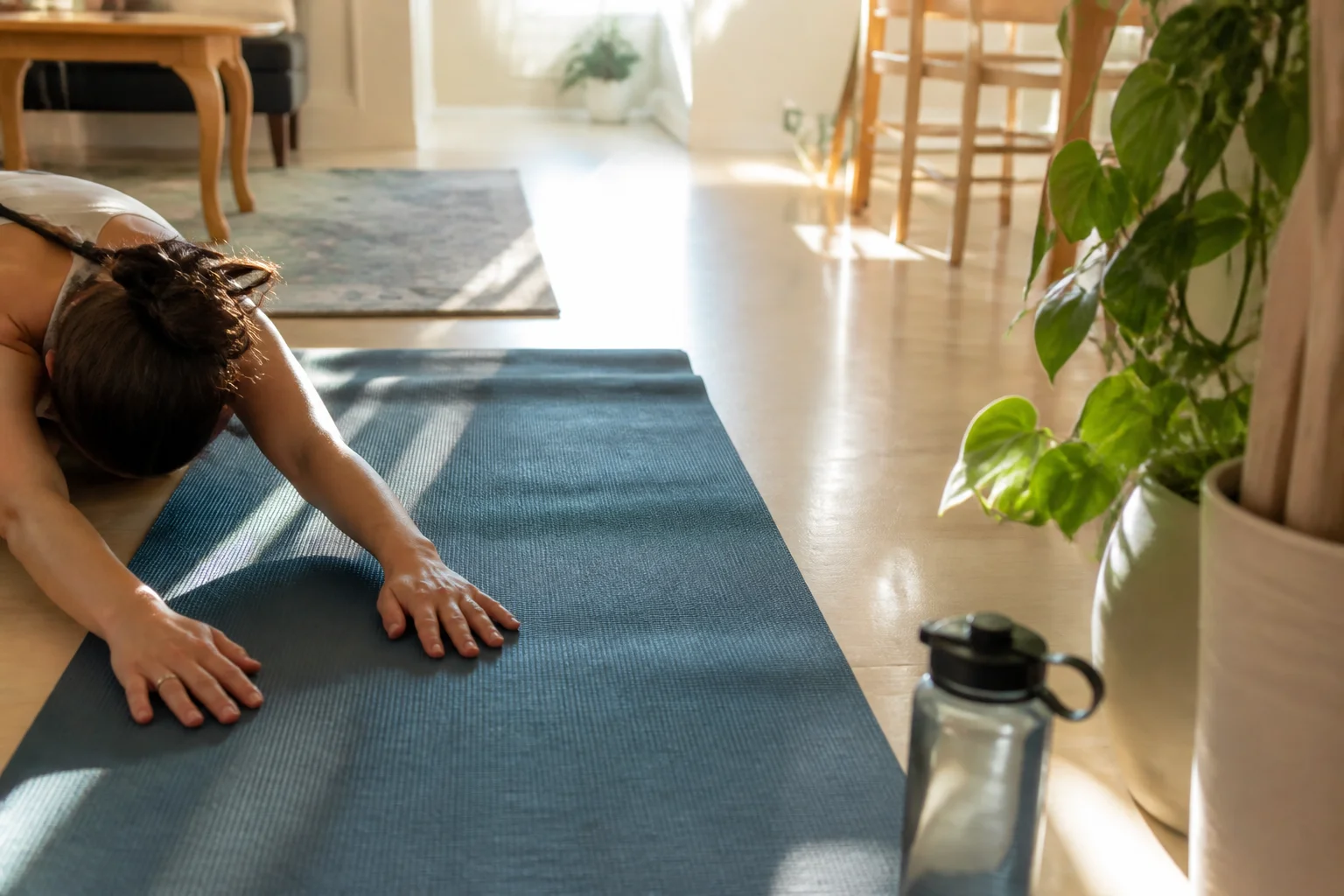
Every mat looks identical online and behaves differently the first time you sweat on it. Here's the thickness math, the grip chemistry the price actually buys, and which mat suits which practice.
In this article:
- Thickness: the goldilocks math
- Grip: where the money actually goes
- Matching mat to practice
- Break-in, care and the lifespan truth
- Key takeaways
- FAQ
Thickness: the goldilocks math
3mm and under: stability and floor-feel — balance poses love it, knees don't. 4–5mm: the sweet spot for most practices — cushion for knees, stable for standing work. 6mm+: feels luxurious in the store and wobbles in tree pose — thick mats are for restorative practice, sensitive joints and hard floors, not better-ness. The counterintuitive rule: more cushion = worse balance, because your foundation sinks. Travel mats (1–2mm, foldable) are a second mat, not a first.
Grip: where the money actually goes
Premium mats split into two grip strategies: polyurethane-top mats that grip harder the sweatier things get (the hot-yoga answer, at the cost of dark sweat marks and gentler cleaning), and natural rubber with excellent wet-ish grip and eco-credentials (heavier, a rubber smell that fades, off-limits for latex allergies). If your practice sweats, grip is the entire justification for spending more.
Matching mat to practice
- Dynamic/vinyasa/hot: PU-top or rubber grip mat, 4–5mm — the sweat test is the whole game.
- Gentle/hatha/stretching: a decent 5mm TPE or PVC mat is honestly plenty.
- Restorative/pilates-mat/floor work: 6–8mm cushion earns its keep.
- Balance-heavy practice: 3–4mm and firm.
- Sizing note tall people learn late: standard is 68" — 72–84" mats exist and change everything past 5'10".
Break-in, care and the lifespan truth
New-mat slipperiness is real: factory residue coats most mats — a salt scrub or a few soapy wipe-downs (and honestly, a few sweaty sessions) breaks in the grip. Care: wipe after sweaty practice, air-dry fully before rolling (rolled damp mats grow funk), keep rubber out of baked car trunks.
Key takeaways
- 4–5mm suits most practice; thicker cushions knees but wobbles balance.
- Sweat is the real test — PU-top and rubber mats are why premium prices exist.
- New mats slip until the factory film scrubs off — break-in is normal.
- Tall than 5'10"? Buy the long mat and stop folding yourself to fit.
FAQ
What thickness yoga mat is best?
4–5mm for most people — knee comfort without balance wobble. 6mm+ for restorative and sensitive joints; 3mm for balance-focused practice.
Why does my new mat feel slippery?
Factory residue — scrub with soapy water or salt and give it a few sessions. If it still slips when sweaty, the mat's surface is the limit, not you.
Are expensive yoga mats worth it?
For sweaty practice, yes — wet-grip chemistry and durability are real.
How do I clean a yoga mat?
Mild soapy water and a wipe-down, air-dry fully before rolling. Skip harsh cleaners on PU and rubber surfaces — they strip the grip you paid for.
Keep reading
Adjustable Dumbbells: Dial vs Plate and What Breaks →Exercise Bikes: Spin vs Upright vs Recumbent Explained →
Not sure which one to buy?
Vic's benches: real Amazon & Walmart listings, live prices, honest verdicts.
Ask Vic →