Adjustable dumbbells: dial vs plate-loaded, and what actually breaks
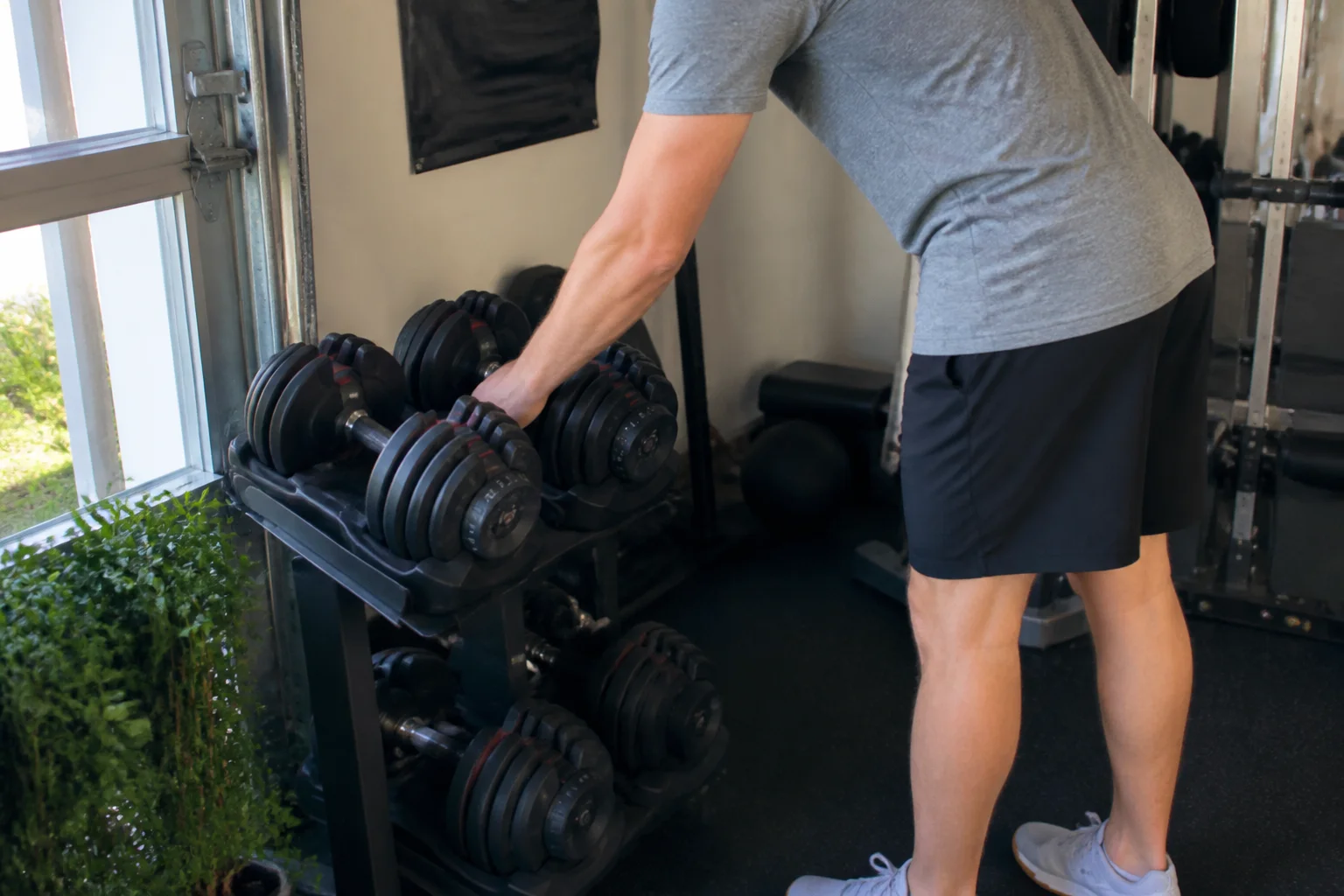
A rack of fixed dumbbells costs a fortune and a wall; one adjustable pair replaces it in two square feet. The mechanism you pick decides whether that trade delights or rattles — here's the honest split.
In this article:
- The two mechanisms, honestly
- The drop rule (what actually breaks)
- Weight range math
- The details that decide daily happiness
- Key takeaways
- FAQ
The two mechanisms, honestly
Dial/selector types: turn a dial, lift, done — 3-second changes that keep drop-sets and circuits honest. The cost: more plastic in the mechanism, bulkier heads, and the one rule below. Plate-loaded (spinlock or quick-lock): barbell-simple, near-indestructible, cheapest per pound — and 30–60 second changes that quietly discourage the workout structure you bought them for. The honest split: circuits and varied training → dial; straight sets and budget → plates.
The drop rule (what actually breaks)
Every dial-mechanism horror review has the same backstory: dropped dumbbells. Selector mechanisms are precision parts — a drop from standing onto concrete jams trays and cracks housings, and warranties read accordingly. If your training style ends heavy sets with a drop, buy plate-loaded or true drop-rated models, full stop. Controlled-lowering lifters get years from dial sets; the mechanism isn't fragile, it's specific.
Weight range math
Buy for next year's lifts, not today's: pressing movements grow fast, and a 50–52.5lb-per-hand ceiling arrives sooner than beginners expect. The honest tiers: 25lb sets suit rehab and accessory work; 50–55lb sets are the general-fitness sweet spot; 70–90lb sets serve serious pressing and expensive ambitions (check upgrade-kit availability — some lines expand later, the best of both). Also check the minimum: some heavy sets start at 10–15lb, awkward for warm-ups and raises.
The details that decide daily happiness
- Handle feel and length: long adjustable heads knock forearms in curls and flyes — compact designs cost more and feel like real dumbbells.
- The stand question: not vanity — picking 90lbs off the floor to start every session is how backs file complaints; the stand is ergonomics.
- Rattle: good sets lock silent; rattling plates in reviews = rattling forever at home.
- A pair + adjustable bench + this floor's worth of space out-trains most machine setups — the honest home-gym core.
All 9 adjustable dumbbells ranked in one interactive table: tap three answers and the whole lineup re-ranks for your home gym.
Open the ranked bench →Key takeaways
- Dial types for circuits and fast changes; plate-loaded for budget and drop-proof durability.
- The drop rule decides lifespan — selector mechanisms and concrete don't negotiate.
- 50–55lb per hand is the sweet spot; buy for next year's presses, check upgrade kits.
- The stand isn't vanity — floor-picking 90lbs every session is a back tax.
FAQ
Are adjustable dumbbells worth it?
One pair genuinely replaces a rack for home training — the space and cost math is decisive. The mechanism choice (dial vs plates) is where satisfaction is won or lost.
Can you drop adjustable dumbbells?
Plate-loaded: mostly yes. Dial/selector types: no — drops are the #1 cause of jammed mechanisms and voided warranties. Match the mechanism to your lifting style.
What weight range should I buy?
50–55lb per hand covers general fitness with growth room. Buy for next year's strength; check whether the line sells expansion kits.
Dial or spinlock dumbbells?
Dial for fast-changing workouts (circuits, drop sets); spinlock/plates for durability, budget and lifters who drop. Speed vs indestructibility is the whole trade.

Not sure which one to buy?
Vic's benches: real Amazon & Walmart listings, live prices, honest verdicts.
Ask Vic →