Wireless chargers: real speeds, Qi2, and why yours is slow
Wireless charging trades speed for the drop-and-forget habit — a good trade in the right places. Here's what the wattage games actually mean, why Qi2 finally fixed alignment, and where the pad beats the cable.
In this article:
- The speed reality
- Qi2: the magnet upgrade that matters
- Why yours is slow: the checklist
- What to buy where
- Key takeaways
- FAQ
The speed reality
Cables fast-charge modern phones at 20–45W; wireless delivers a real 7.5–15W, generating heat doing it. Translation: the cable half-fills a dead phone in 25 minutes; the pad takes a couple of hours. Which is exactly fine overnight and at a desk — the two places wireless belongs. Racing to leave the house? That's cable territory, always.
Qi2: the magnet upgrade that matters
Old-pad frustration was alignment — an inch off-center and you woke to 40%. Qi2 standardizes magnetic snap-alignment (MagSafe-style) across brands: the phone clicks into the sweet spot every time, delivers its full 15W reliably, and enables stands and car mounts that hold the phone by magnet alone. Buying advice is simple now: if your phone supports Qi2/MagSafe, buy Qi2 and stop thinking about it. (Magnetic cases required for the click; thick rugged cases without magnets return you to alignment roulette.)
Why yours is slow: the checklist
- The wall brick: a 15W pad on a 5W cube charges at 5W — the #1 cause; the pad needs a 20W+ adapter (often sold separately, read the box).
- Alignment (non-magnetic pads): off-center coils = slow charge and extra heat.
- The case: most under 3mm are fine; thick, metal-plated or wallet cases block or throttle.
- Heat throttling: pads slow themselves when hot — sun-baked car mounts and pillow-adjacent pads crawl.
- Multi-device pads split their budget; check the per-spot wattage, not the headline.
What to buy where
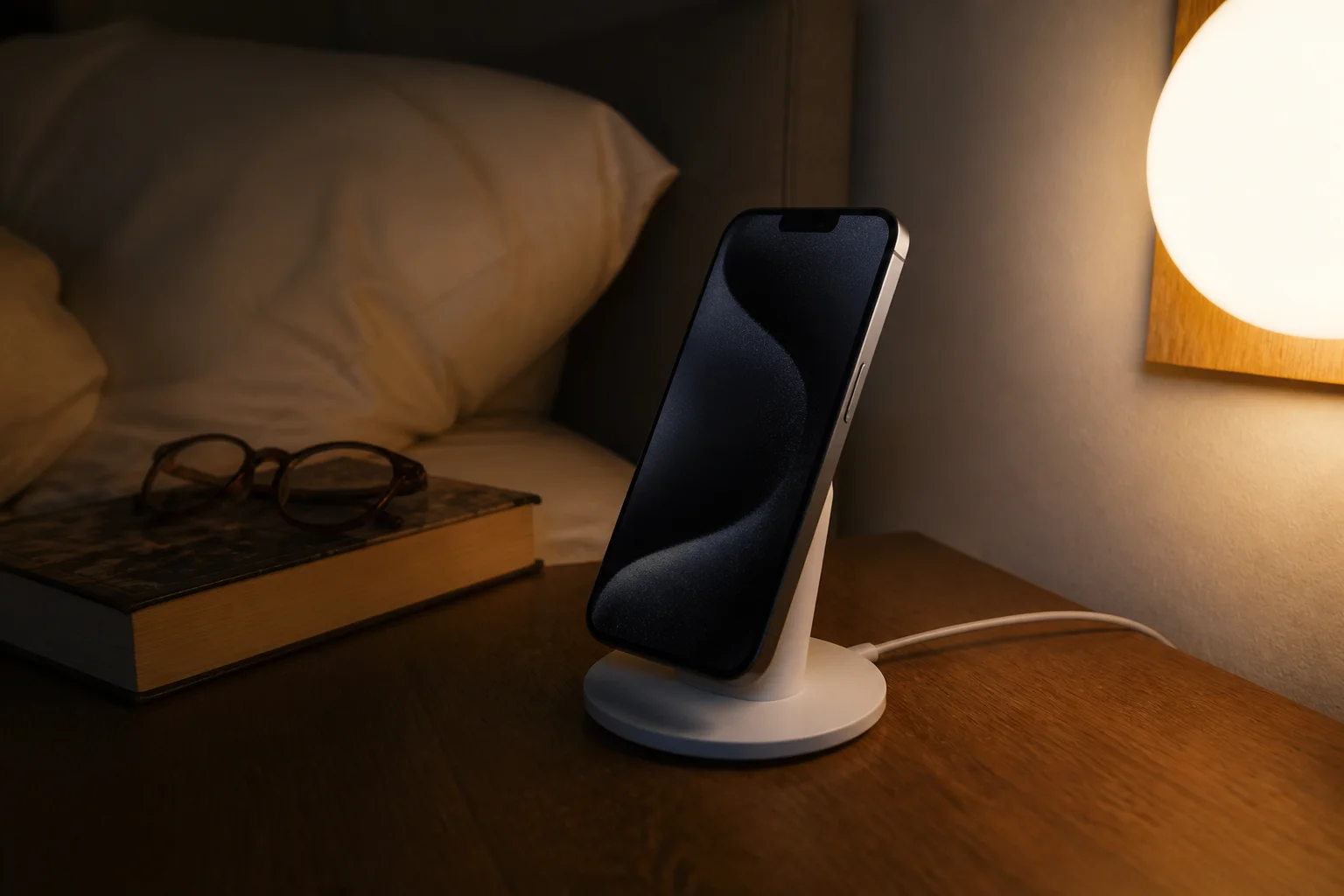
Nightstand: a stand (not flat pad) so alarms and faces stay visible, with a no-blinding-LED design — reviews will say. Desk: stand at glance height — the drip-charge home that ends battery anxiety. Car: Qi2 magnetic mounts solved the vent-clamp wobble era. Travel/multi-device: the fold-flat 2-in-1s earn bag space; the 3-in-1 towers earn nightstands if you also wear a watch and earbuds. Battery health note: shallow drip top-ups are gentle — the pad lifestyle is battery-friendly, heat is the only enemy worth minding.
Key takeaways
- Wireless = convenience charging (nightstand, desk); cables remain the speed tool.
- Qi2 magnetic alignment fixed the category — buy it if your phone supports it.
- Slow pad? Check the wall brick wattage first — it's the culprit 80% of the time.
- Stands beat flat pads almost everywhere; check per-spot watts on multi-chargers.
FAQ
Why does my wireless charger charge so slowly?
Usually the wall adapter can't feed it — a 15W pad needs a 20W+ brick. Then alignment, thick cases, and heat throttling, in that order.
Is wireless charging bad for the battery?
No — heat is the only real concern, and decent pads manage it. Frequent shallow top-ups are arguably gentler than daily deep cable cycles.
What is Qi2 and do I need it?
The new standard adding magnetic snap-alignment and a reliable 15W across brands. If your phone supports it, it removes every classic pad annoyance at similar prices.
Can I leave my phone on the charger all night?
Yes — modern phones manage overnight charging intelligently, and many finish the last stretch just before your alarm. That's the intended use.
Keep reading
Power Banks: What mAh Really Means and the Charging Speed Trap →Smart Plugs: The 10 Uses That Actually Stick →
Not sure which one to buy?
Vic's benches: real Amazon & Walmart listings, live prices, honest verdicts.
Ask Vic →