Smart plugs: the uses that stick after the novelty fades
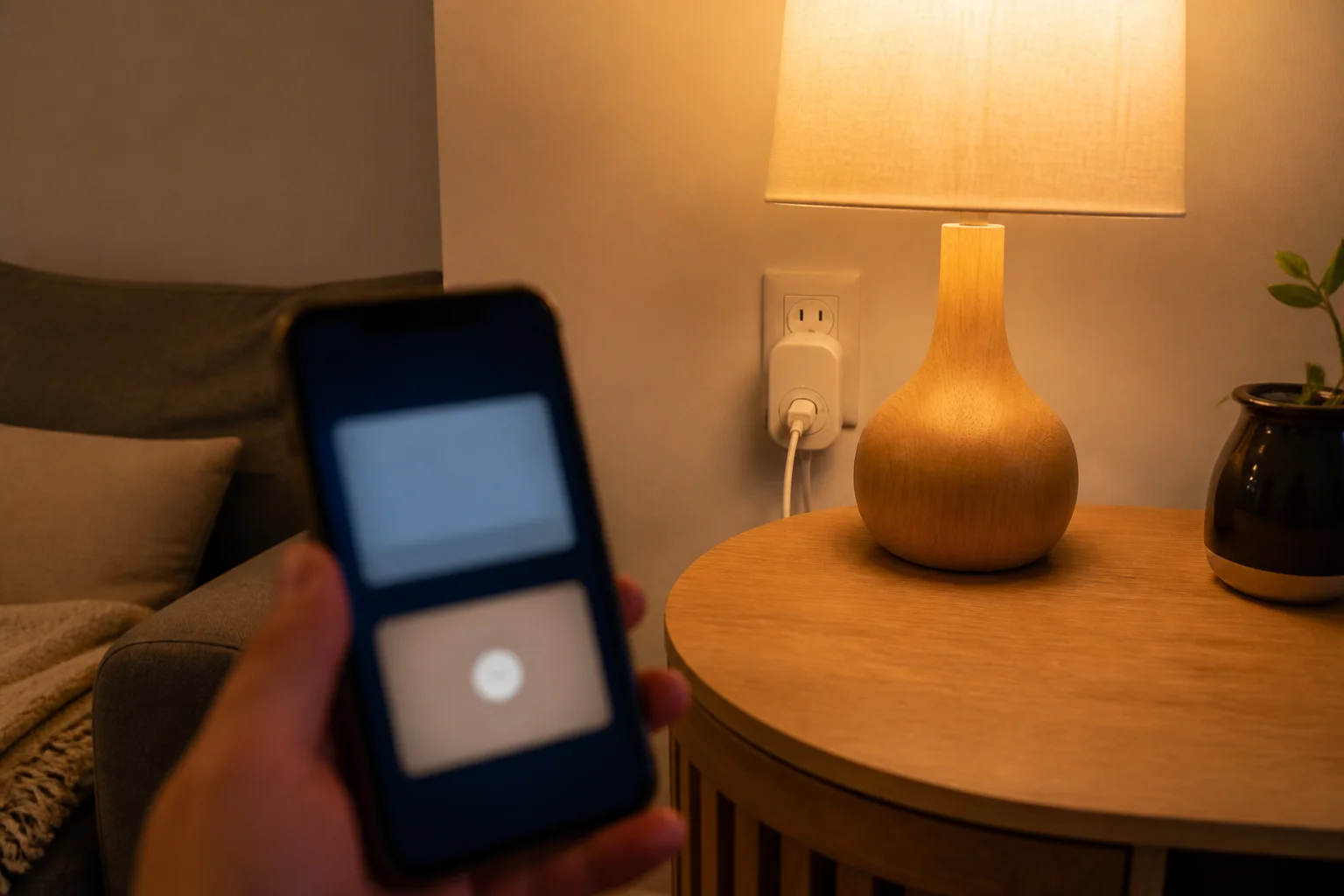
The smart plug is home automation's gateway drug: twelve dollars, thirty seconds of setup, and suddenly the lamp obeys. Here's what owners still use a year later — and the two specs that separate good from junk-drawer.
In this article:
- The uses that survive the novelty
- What smart plugs can't do
- The two specs that matter
- Heaters: the safety asterisk
- Key takeaways
- FAQ
The uses that survive the novelty
- Lamps on sunset schedules — the #1 keeper; the house lights itself and looks lived-in on vacation (randomized 'away modes' beat any fake-TV gadget).
- The anxiety off-switch:
- Morning circuits: coffee maker (the classic drip kind), towel warmer, slow lamp wake-up.
- Vampire control: the entertainment-center cluster that sips power all night dies on schedule.
- Seasonal: holiday lights on timers — the December workhorse.
- Voice for the unreachable: the outlet behind the couch, finally addressable.
What smart plugs can't do
A plug is an on/off switch — it can't make devices do things. The appliance must resume when power returns: simple lamps, fans, heaters with mechanical dials work; anything with a soft-power button (TVs, most modern coffee machines, game consoles) just sits there waiting for a press. The pre-buy test: unplug it, replug it — if it comes back on doing its job, it's smart-plug compatible. Also: standard plugs handle lamps and small appliances, but check the amp rating before heaters — heaters want 15A-rated plugs specifically.
The two specs that matter
Local control / hub protocol: WiFi plugs that depend on a foreign cloud die when the company does, and some phone home constantly — plugs supporting local standards (or at minimum a reputable ecosystem) keep working offline and private. Energy monitoring: the surprisingly great feature — a monitoring plug tells you what the old freezer actually costs a month, and pays for itself in found vampires. Size matters too: bulky plugs that block the second outlet are the category's classic annoyance; slim designs exist, choose them.
Heaters: the safety asterisk
Space heaters on smart plugs are legitimate if the plug is 15A-rated and the heater is modern (tip-over and overheat protection). The rule that keeps it safe: use scheduling to turn heaters off (the forgot-it fear), not to turn them on unattended into a room nobody's watching. Remote-on into an empty house is where the convenience stops being smart.
Key takeaways
- Sunset lamp schedules and the hair-tool kill switch are the uses that stick.
- Only dumb-resuming devices work — the unplug/replug test tells you instantly.
- Buy 15A-rated, slim-profile plugs with energy monitoring; prefer local control.
- Heaters: schedule off, never unattended on.
FAQ
What should I plug into a smart plug first?
The living-room lamp on a sunset schedule — it's the use every owner keeps. Second: whatever device you always worry you left on.
Why won't my coffee maker work with one?
Soft-power buttons don't resume after power returns. Simple mechanical-switch appliances work; electronics that wake to standby don't.
Are smart plugs safe for space heaters?
With a 15A-rated plug and a modern heater with safety cutoffs, yes — for turning off. Don't remote-start heat into an unattended room.
Do smart plugs save electricity?
Directly a little (killing standby vampires); indirectly more — the energy-monitoring models expose which appliances are quietly expensive, and that knowledge is what saves.
Keep reading
Home Security Cameras: Wired vs Wireless vs Doorbell Explained →Space Heaters: Safety Rules and What They Really Cost to Run →
Not sure which one to buy?
Vic's benches: real Amazon & Walmart listings, live prices, honest verdicts.
Ask Vic →