Water flosser vs string floss: what the evidence actually says
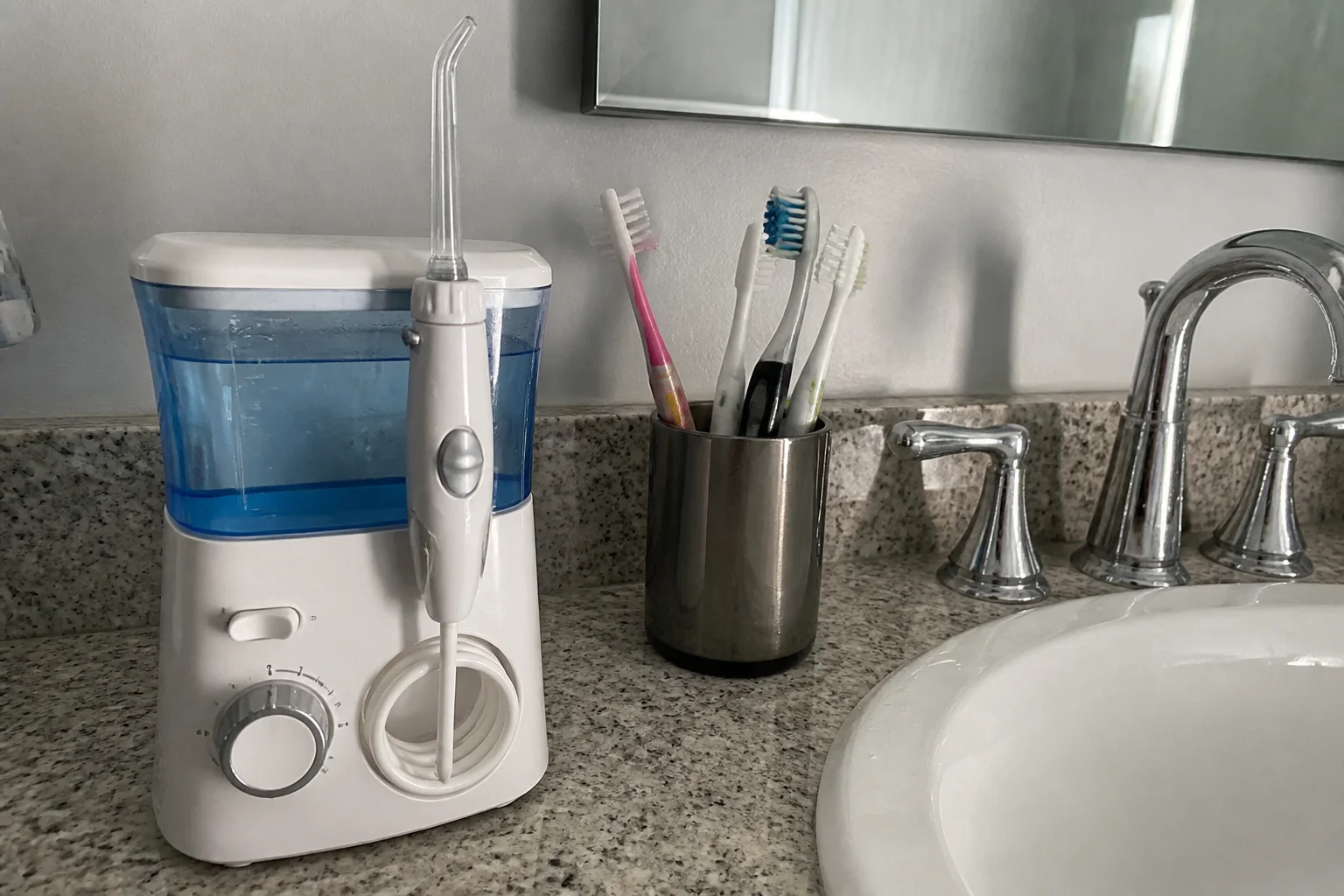
The dirty secret of flossing advice: barely anyone flosses. That's why water flossers matter — the evidence says the best interdental cleaner is the one that actually happens nightly.
In this article:
- What the studies actually show
- Who benefits most
- Countertop vs cordless
- Using it right (the learning curve)
- Key takeaways
- FAQ
What the studies actually show
Head-to-head trials repeatedly find water flossers matching or beating string floss on gingivitis and bleeding reduction — with the honest caveat that compliance drives everything: people use the pleasant tool. String, used with perfect C-shape technique daily, remains excellent and portable. The realistic ranking: water flosser used nightly > string used occasionally > perfect technique that doesn't happen. Dentists have quietly converged on 'whichever one you'll actually do.'
Who benefits most
- Braces and aligners: the killer app — jets clean around brackets string can't reach; orthodontists recommend them near-universally.
- Implants, bridges, crowns: gentle cleaning around dental work without floss-snap trauma.
- Bleeding gums / early gum disease: the studies' strongest effect — pulsed water massages and cleans below the gumline.
- Dexterity limits and floss-haters: the compliance machine.
- String remains king for tight-contact plaque scraping and travel; the ideal answer for many is water nightly + string for the tight spots.
Countertop vs cordless
Countertop: bigger reservoir (a full session without refilling), stronger and steadier pressure, family shared use with swapped tips — needs outlet and counter real estate. Cordless: shower-friendly and travel-sized, but tanks last ~30–45 seconds (expect one mid-session refill) and pressure runs lower. Bathroom counter space is honestly the deciding spec for most buyers.
Using it right (the learning curve)
Night one is a water fight — lean over the sink, close lips mostly, start on low. Aim the jet at the gumline at 90°, pause briefly between teeth, trace the line front and back; ~60 seconds total. Warm water if your teeth are sensitive. Expect early-days gum bleeding if your gums are inflamed — that's the condition improving, and it settles within a couple of weeks of nightly use.
Key takeaways
- Evidence favors the tool you'll use nightly — and for most people that's the water flosser.
- Braces, implants and bleeding gums see the biggest wins.
- Countertop = power and capacity; cordless = shower and travel with a mid-session refill.
- Aim at the gumline, start on low, lean over the sink — the spray phase passes.
FAQ
Do water flossers really replace string floss?
For gum health with nightly use, studies say yes for most people. Very tight contacts still favor string — many dentists suggest water daily plus string where it's snug.
Why do my gums bleed with a new water flosser?
Inflamed gums bleed at first contact with any cleaning; with nightly use bleeding typically fades in 1–2 weeks — persistent bleeding beyond that is a dentist visit.
Countertop or cordless water flosser?
Countertop if the counter can host it — steadier pressure, full-session tanks. Cordless for shower use, small bathrooms and travel.
What pressure setting should I use?
Start low, find the highest comfortable setting over a week or two. Effective cleaning doesn't require the red zone — technique at the gumline beats raw PSI.
Keep reading
Sonic vs Oscillating Electric Toothbrushes: What Dentists See →Smart Scales: How Accurate Is the Body Fat Number Really? →
Not sure which one to buy?
Vic's benches: real Amazon & Walmart listings, live prices, honest verdicts.
Ask Vic →