Sonic vs oscillating toothbrushes: the difference your dentist can see
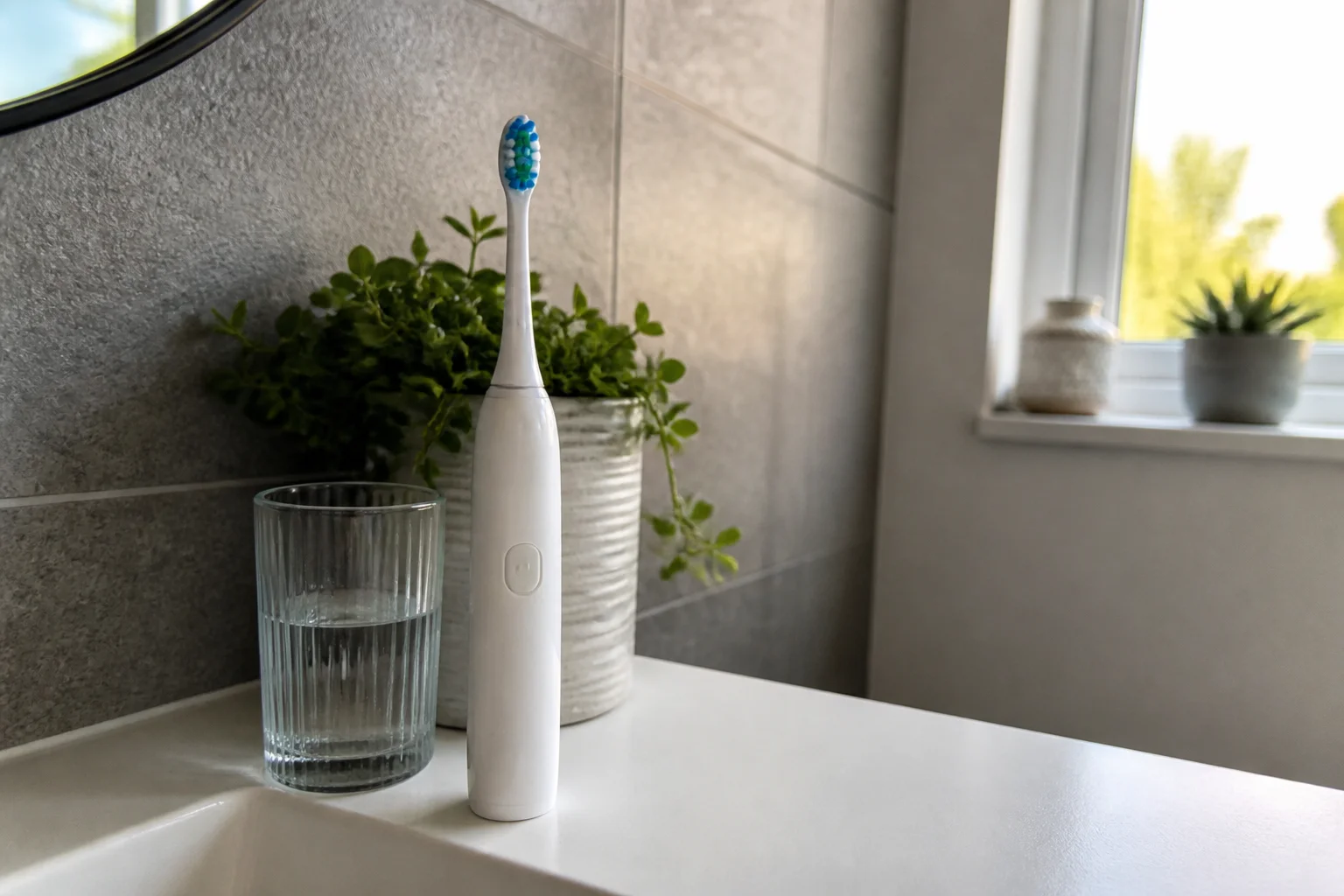
Both beat a manual brush — the research is settled on that. Between the two technologies, the honest answer is less about the motor and more about the timer, the pressure sensor, and which one you'll actually use twice a day.
In this article:
- The two technologies, honestly
- The features that actually change outcomes
- Where the money goes — and stops working
- The real cost is heads
- Key takeaways
- FAQ
The two technologies, honestly
Oscillating (small round head, rotates back and forth): cups each tooth individually — the slightly better evidence base for plaque removal in head-to-head studies, and the more 'scrubbed' feel. Sonic (elongated head, 30,000+ vibrations/min): covers more surface per stroke, gentler feel, drives fluid between teeth. The clinical difference between good versions of each is small — much smaller than the difference between either and a manual brush, and far smaller than the difference between using one properly and not.
The features that actually change outcomes
Dentists will tell you the transformative features are boring: the 2-minute timer with 30-second quadrant pacing (most people brush 45 seconds without one) and the pressure sensor (scrubbing hard is how enamel and gums get damaged — a light that says 'ease up' genuinely retrains people). Both now appear on mid-range models. Apps, AI coaching and position tracking are fun for two weeks; the timer and sensor work forever.
Where the money goes — and stops working
Above it you're buying screens, travel cases, multiple modes (most people settle on one) and app features. The flagship 'cleans better' claims between tiers of the same brand rarely survive independent testing; the head hitting your gumline for two full minutes is what cleans.
The real cost is heads
Check head prices before choosing a brand, and know that reputable third-party heads for the big ecosystems test fine at half the price. Subscription head plans are convenient; do the per-head math first.
Key takeaways
- Both technologies beat manual; between them the gap is small — habit beats hardware.
- Flagship money buys screens and cases, not cleaner teeth.
- Price the replacement heads — they cost more than the handle over five years.
FAQ
Which is better, sonic or oscillating?
Studies give oscillating a slight edge on plaque, but good versions of both land close. Pick the feel you'll use for the full two minutes — that choice dominates.
How often should I replace the brush head?
Every 3 months, or when bristles splay — splayed bristles measurably clean worse. Faded indicator bristles are the built-in reminder.
Are cheap electric toothbrushes any good?
Do whitening modes work?
They're polishing modes — they help with surface stains, slowly. No brush changes your enamel color; that's chemistry (whitening products), not scrubbing.
Keep reading
Water Flosser vs String Floss: What Dentists Actually Say →Smart Scales: How Accurate Is the Body Fat Number Really? →
Not sure which one to buy?
Vic's benches: real Amazon & Walmart listings, live prices, honest verdicts.
Ask Vic →