Smart scales: the body-fat number is wrong — and still useful
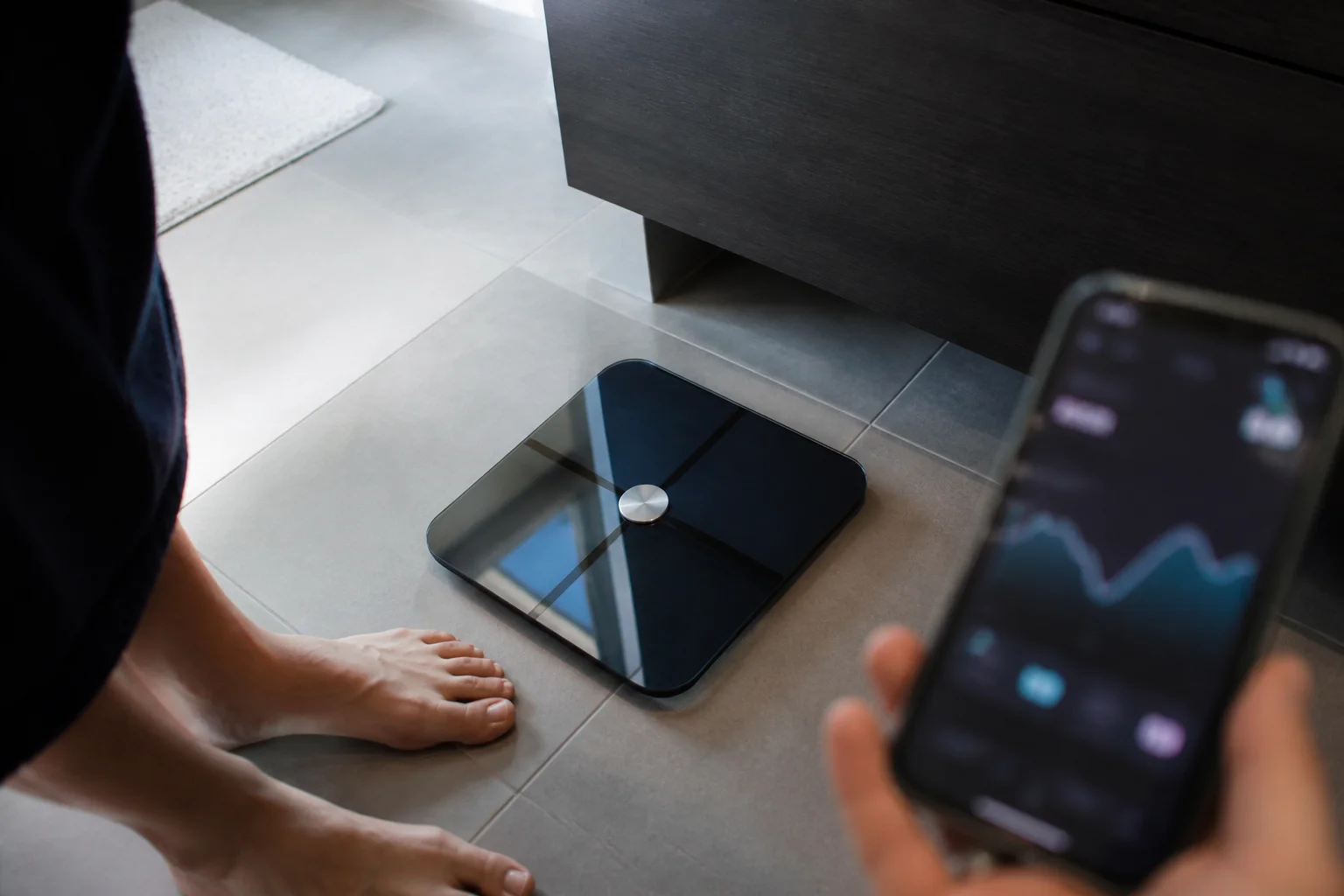
Here's the paradox of the smart scale: the body-fat percentage is often wrong by several points, and the scale is still one of the most useful health gadgets you can own. The trick is knowing which numbers to trust.
In this article:
- How the magic works (and why it wobbles)
- Why trends are still gold
- Making readings consistent
- Which metrics deserve attention
- Key takeaways
- FAQ
How the magic works (and why it wobbles)
Bioelectrical impedance (BIA): a harmless current runs through you; fat resists more than muscle; equations turn resistance into a body composition estimate. The catch — hydration, meals, workouts, warm feet and time of day all swing the reading, and foot-to-foot scales measure mostly your lower body, extrapolating the rest. Against lab methods (DEXA), consumer scales commonly miss absolute body-fat by 3–8+ points. The absolute number is an estimate wearing a decimal point.
Why trends are still gold
The error is fairly consistent per person — so while '22%' may really be 26%, a fall from 22 to 20 over two months almost certainly reflects a real change in the same direction. Same for muscle-mass trends. Weight itself, the scale's boring core job, is measured accurately. The winning mindset: ignore absolutes, watch 30-day trend lines, and let the app's graph — not any single morning — tell the story. Daily weight noise of ±2–4 lbs is water and food, not fat.
Making readings consistent
- Same time daily — best: morning, post-bathroom, pre-breakfast, minimal clothes.
- Bare feet on the electrodes; hard floor, never carpet (carpet skews weight itself).
- Not right after workouts, showers or big meals — hydration swings dominate BIA.
- Athlete mode if you're notably muscular (the standard equations under-serve you).
- Multi-user homes: verify the scale auto-assigns correctly; crossed data ruins both trends.
Which metrics deserve attention
Worth watching: weight trend, body-fat trend, and (for consistency-checking) muscle-mass trend. Fun but fuzzy: body water, bone mass, visceral-fat scores, 'metabolic age' — derived numbers stacked on estimates; treat as decoration. Buying notes: any reputable scale measures weight well, so choose on app quality and data export (does it sync where your other health data lives?), multi-user handling, and pregnancy/pacemaker modes if relevant — BIA current is contraindicated with pacemakers; weight-only mode matters there.
Key takeaways
- Absolute body-fat % can miss by several points; the trend over weeks is the real signal.
- Weigh same-time, bare feet, hard floor — consistency beats gadget precision.
- Daily ±2–4 lb swings are water, not fat; watch the 30-day line.
- Buy on app quality, data sync and multi-user handling — the sensors are commodity.
FAQ
Are smart scale body fat readings accurate?
Absolutely, no — errors of several points versus lab scans are normal. Relatively, yes — your own trend over weeks tracks real change well if you measure consistently.
When should I weigh myself?
Morning, after the bathroom, before eating, same conditions daily. It's the closest thing to a controlled experiment your bathroom offers.
Why did my body fat jump overnight?
Hydration — BIA reads water changes as composition changes. A salty dinner or a hard workout moves the number; the fat didn't arrive overnight.
Metabolic age and visceral fat — real?
Derived estimates on top of estimates. Directionally interesting, individually unreliable — enjoy them like a horoscope with electrodes.
Keep reading
Home Blood Pressure Monitors: Accuracy, Cuffs and Technique →Water Flosser vs String Floss: What Dentists Actually Say →
Not sure which one to buy?
Vic's benches: real Amazon & Walmart listings, live prices, honest verdicts.
Ask Vic →