Space heaters: the safety rules and the real cost per hour
Here's the secret the boxes won't print: every 1,500W plug-in heater produces identical heat for identical money. What differs is how it delivers that heat — and how safely.
In this article:
- The physics nobody can dodge
- Delivery types, honestly
- The safety rules that are actually load-bearing
- Space heater vs central heating math
- Key takeaways
- FAQ
The physics nobody can dodge
Electric resistance heat is ~100% efficient by definition — 1,500W in, 1,500W of heat out, whatever the marketing says. At the average US rate (~17¢/kWh) that's ~25¢ per hour flat-out, cycling lower on a thermostat. 'Eco', 'ceramic', 'infrared efficiency' — none of it changes the meter. Savings come from the thermostat, the timer, and heating one human instead of one house.
Delivery types, honestly
- Ceramic fan heaters: fast hot air, compact — the bathroom-and-desk workhorse. Noisiest.
- Oil-filled radiators: slow, silent, keep radiating after shutoff — the home-office and bedroom pick for hours-long sessions.
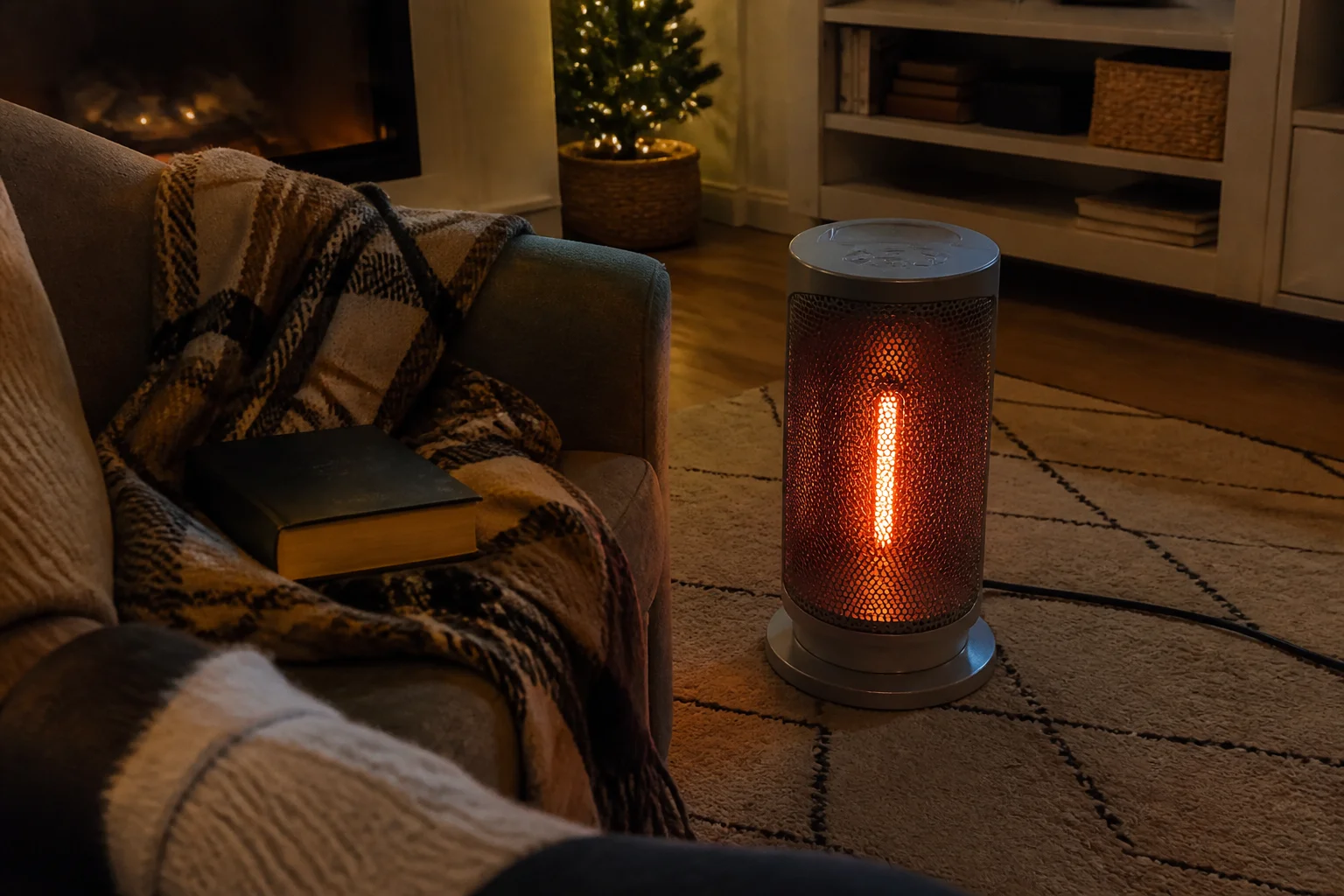
- Infrared/radiant: heats people and objects, not air — instant warmth in drafty spaces and garages; cheapest in practice because you run fewer watts pointed at a person.
- 'Fireplace' styles: the same 1,500W wearing a costume — buy for looks, not performance.
The safety rules that are actually load-bearing
Heaters cause a disproportionate share of house fires, almost all from the same four mistakes: extension cords and power strips (1,500W melts them — wall outlet only, always), three feet of clearance from anything burnable, unattended running (off when you leave the room; sleep with oil-filled thermostatic units only, if at all), and missing cutoffs — tip-over and overheat protection are non-negotiable specs, and the no-name marketplace bargains are where they're fake. This is the one category where the certification mark genuinely matters.
Space heater vs central heating math
Heating one occupied room while the thermostat drops elsewhere: the space heater wins clearly — 25¢/hour beats warming bedrooms nobody's in. Heating three rooms with three heaters: you've reinvented central heating at worse prices (gas heat delivers the same warmth for roughly a third the cost per unit). The winning play is surgical: house at a modest setback, one heater where the human is.
Key takeaways
- All 1,500W heaters make identical heat (~25¢/hr) — 'efficient' models are marketing.
- Oil-filled for long silent sessions; ceramic for fast blasts; infrared for drafty spaces.
- Wall outlet only, three feet clear, tip-over cutoff required — the fire stats are the argument.
- One heater, one human, house set back = savings. Three heaters = expensive central heating.
FAQ
How much does a space heater cost per hour?
At ~17¢/kWh: about 25¢ flat-out at 1,500W, less on a thermostat as it cycles. Every brand, same math.
Can I plug a space heater into a power strip?
No — 12.5 amps sustained melts strips and cords; it's a leading cause of heater fires. Wall outlet, always.
Which space heater is safest?
Oil-filled radiators run coolest-surface and calmest; whatever you buy needs tip-over and overheat cutoffs from a certified brand — that's the actual safety spec.
Is it cheaper than turning up the heat?
For one room and one person, yes. For whole-home warmth, central gas heat is ~3× cheaper per unit of heat — heaters are scalpels, not furnaces.
Keep reading
Smart Plugs: The 10 Uses That Actually Stick →Tower Fan vs Box Fan vs Pedestal: Which Moves Air Best? →
Not sure which one to buy?
Vic's benches: real Amazon & Walmart listings, live prices, honest verdicts.
Ask Vic →