Home blood pressure monitors: the accuracy checklist that actually matters
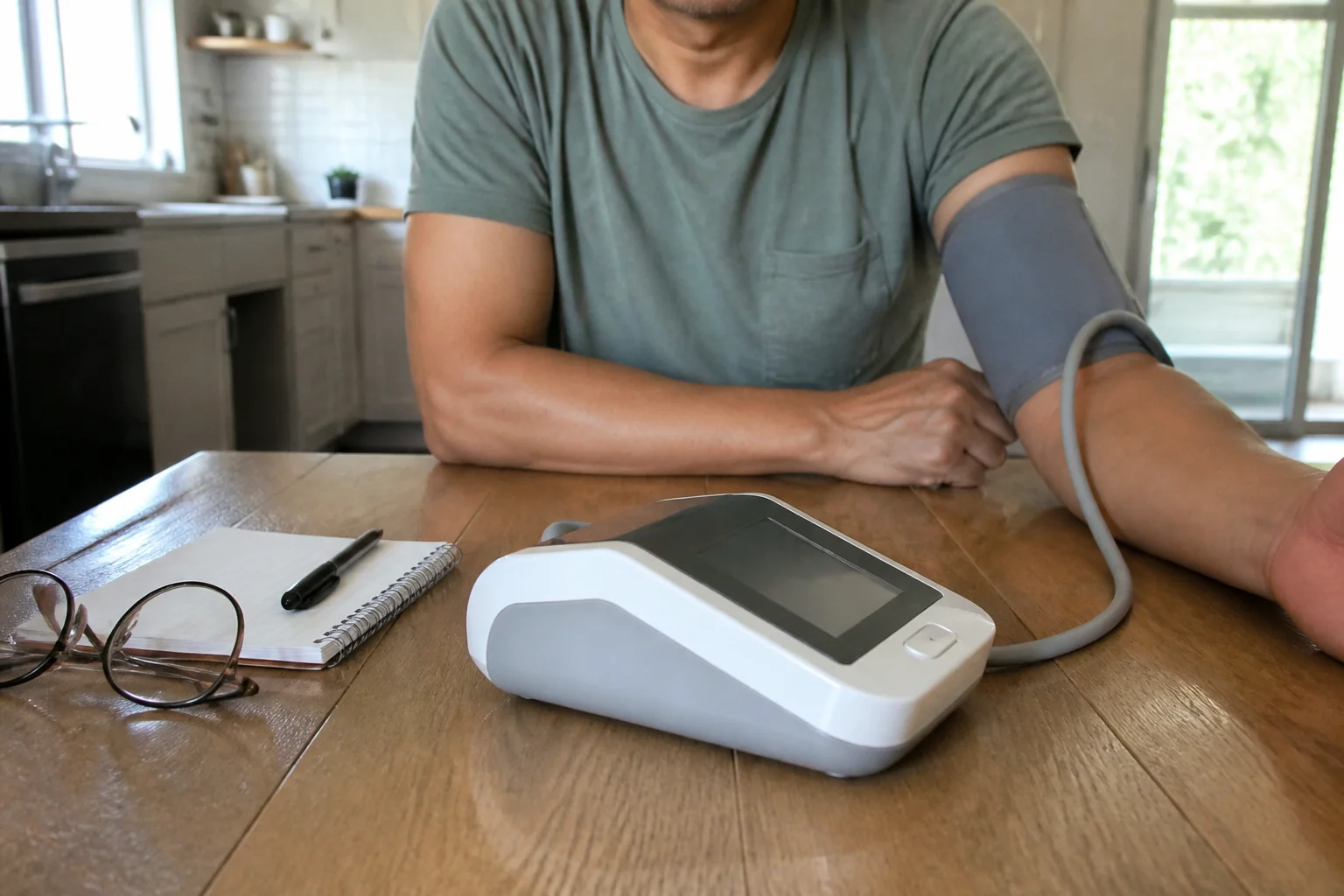
Doctors increasingly trust your home numbers over the office ones — white-coat nerves are real. That trust assumes three things: a validated device, a cuff that fits, and two minutes of boring technique. Here's all three.
In this article:
- Validated or it's a toy
- Upper arm beats wrist (with one exception)
- The cuff-size trap
- The protocol that makes numbers doctor-grade
- Key takeaways
- FAQ
Validated or it's a toy
The spec that outranks every feature: clinical validation. Look for devices listed on validateBP.org (US Blood Pressure Validated Device Listing) or noted as AAMI/ESH/ISO-validated — meaning the model was independently tested against clinical measurement. Plenty of well-reviewed gadgets aren't on those lists. Start the shopping at the list, then choose features.
Upper arm beats wrist (with one exception)
Upper-arm cuffs measure the brachial artery — the reference standard, less sensitive to position error. Wrist monitors are hypersensitive to being held exactly at heart level; a few inches of drift adds real error, and clinicians see wildly scattered wrist logs constantly. The exception: very large upper arms that no cuff fits, or discomfort that prevents regular measuring — a carefully-used wrist monitor you'll actually use beats an arm cuff in a drawer.
The cuff-size trap
The most common accuracy killer costs nothing to fix: measure your upper-arm circumference (tape measure, midpoint of upper arm) and match the cuff range on the box. Too-small cuffs read high — sometimes 10+ points high — which is how fit, large-armed people get scared by phantom hypertension. Standard cuffs cover ~9–13"; large arms need large cuffs, and brands sell them cheaply. Check before buying, not after the weird numbers.
The protocol that makes numbers doctor-grade
Five minutes seated and calm first (no caffeine/exercise/smoking in the prior 30). Back supported, feet flat, cuff on bare arm, arm rested at heart level, no talking. Take two readings a minute apart, morning and evening for a week when establishing a baseline; log the average, not the scariest one. One elevated reading means nothing (that's why you own the machine); patterns are the product. And bring the device to a checkup once to cross-check it against the office cuff — clinicians are happy to do it.
Key takeaways
- Buy from the validated lists (validateBP.org) — the spec above every feature.
- Upper-arm cuffs are the standard; wrist devices amplify user error.
- Measure your arm and match the cuff size — small cuffs invent hypertension.
- Rested, seated, silent, two readings averaged: technique makes the numbers real.
FAQ
Are home blood pressure monitors accurate?
Validated upper-arm models, used with proper cuff fit and technique — yes, clinically useful. Unvalidated gadgets and hurried readings — not really.
Why are my readings different each time?
BP varies minute to minute by nature; caffeine, talking, a full bladder and arm position add swing. Averages across calm, repeated readings are the true signal.
Wrist or arm monitor?
Arm, unless a fitting cuff genuinely doesn't exist for you or comfort blocks regular use — a wrist device used carefully and consistently beats no measuring.
How often should I check blood pressure at home?
Baseline week: morning and evening pairs. Maintenance: whatever cadence your clinician sets — often a few days a month. Log averages, share the log.
Keep reading
Smart Scales: How Accurate Is the Body Fat Number Really? →Exercise Bikes: Spin vs Upright vs Recumbent Explained →
Not sure which one to buy?
Vic's benches: real Amazon & Walmart listings, live prices, honest verdicts.
Ask Vic →