Pressure washers: PSI, GPM, and what your driveway actually needs
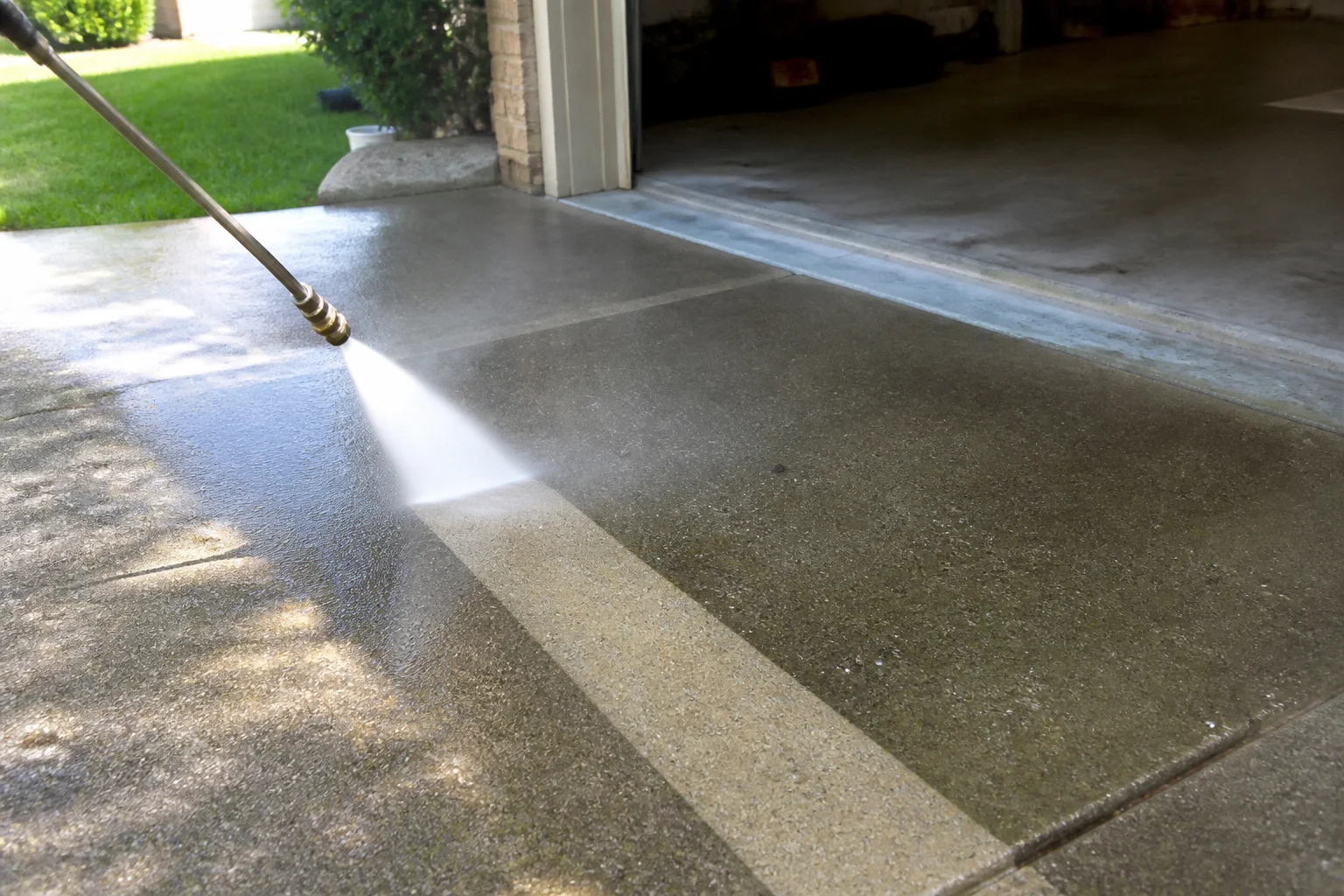
Pressure washer marketing shouts PSI; the job is finished by GPM.
In this article:
- PSI and GPM: the two halves
- What each job actually needs
- Electric vs gas, honestly
- The attachment that beats raw power (and what pressure destroys)
- Key takeaways
- FAQ
PSI and GPM: the two halves
PSI is punching power — what breaks grime's grip. GPM (gallons per minute) is rinsing power — what carries it away. Marketing sells PSI; driveways drink GPM: a 2,000 PSI / 1.6 GPM machine often cleans faster than a 2,800 PSI / 1.1 GPM one because the bottleneck is sweeping loosened muck off the slab. Compare both numbers (multiplied, they're the 'cleaning units' the industry quietly uses); distrust any listing that hides GPM.
What each job actually needs
| Job | Sensible spec | Note |
|---|---|---|
| Cars and bikes | 1,500–1,900 PSI | more is paint-and-trim risk, not speed |
| Decks, fences, siding | 1,800–2,300 PSI | wood tolerates less than you think — fan tips |
| Driveways, patios | 2,300–3,000 PSI, 2+ GPM | GPM matters most here |
| Paint stripping, big concrete | 3,000+ PSI (gas) | the one tier that rewards gas power |
Electric vs gas, honestly
Electric (1,500–2,300 PSI class): quiet, light, instant-on, zero maintenance — right for cars, patios and normal-house life, which is most buyers. Gas (2,800–4,000 PSI): serious flow and power for big concrete, farm equipment and pro-adjacent work — at the cost of noise, winterizing, and engines that sulk after idle winters. The classic mistake is buying gas power for electric jobs: more to maintain, more to destroy surfaces with.
The attachment that beats raw power (and what pressure destroys)
The surface cleaner — the spinning-head disc attachment — cleans flat concrete 3–5× faster than a wand, streak-free, without spraying the windows and the dog. The destruction list every new owner learns expensively: wood fibers fur up under narrow tips (fan tips, 12+ inches back), mortar and paver sand excavates, car paint edges and window seals fail at close range, and zero-degree red tips exist to carve initials in concrete — leave them in the box. Distance and wider tips first; pressure is the last resort, not the first.
Key takeaways
- PSI breaks grip, GPM rinses — compare both; hidden GPM is a red flag.
- Electric 1,800–2,300 PSI with 1.5+ GPM covers normal-house life; gas is for big concrete.
- Wood fibers, mortar, paint edges: what over-pressure eats. Fan tips and distance first.
FAQ
What PSI do I need for a driveway?
2,300–3,000 PSI with 2+ GPM and a surface-cleaner attachment — the attachment matters more than the last 500 PSI.
Can a pressure washer damage my car?
At high PSI and close range, yes — paint edges, trim and tire sidewalls. 1,500–1,900 PSI, fan tip, two feet back, and skip the pressure on aging paint.
Electric or gas pressure washer?
Electric for cars, patios and normal home jobs — quiet and maintenance-free. Gas for large concrete and heavy use; it's power you maintain all year for the weekend you need it.
Why does my deck look fuzzy after washing?
Furred wood fibers = too much pressure or too narrow a tip. Sand lightly, then next time: fan tip, more distance, and let cleaner solution do more of the work.
Keep reading
Lawn Mowers: Battery vs Gas and the Deck Size Math →Cordless Drills: What Voltage You Need and Battery Platform Truth →
Not sure which one to buy?
Vic's benches: real Amazon & Walmart listings, live prices, honest verdicts.
Ask Vic →