Lawn mowers: battery vs gas, and the deck-size math for your yard
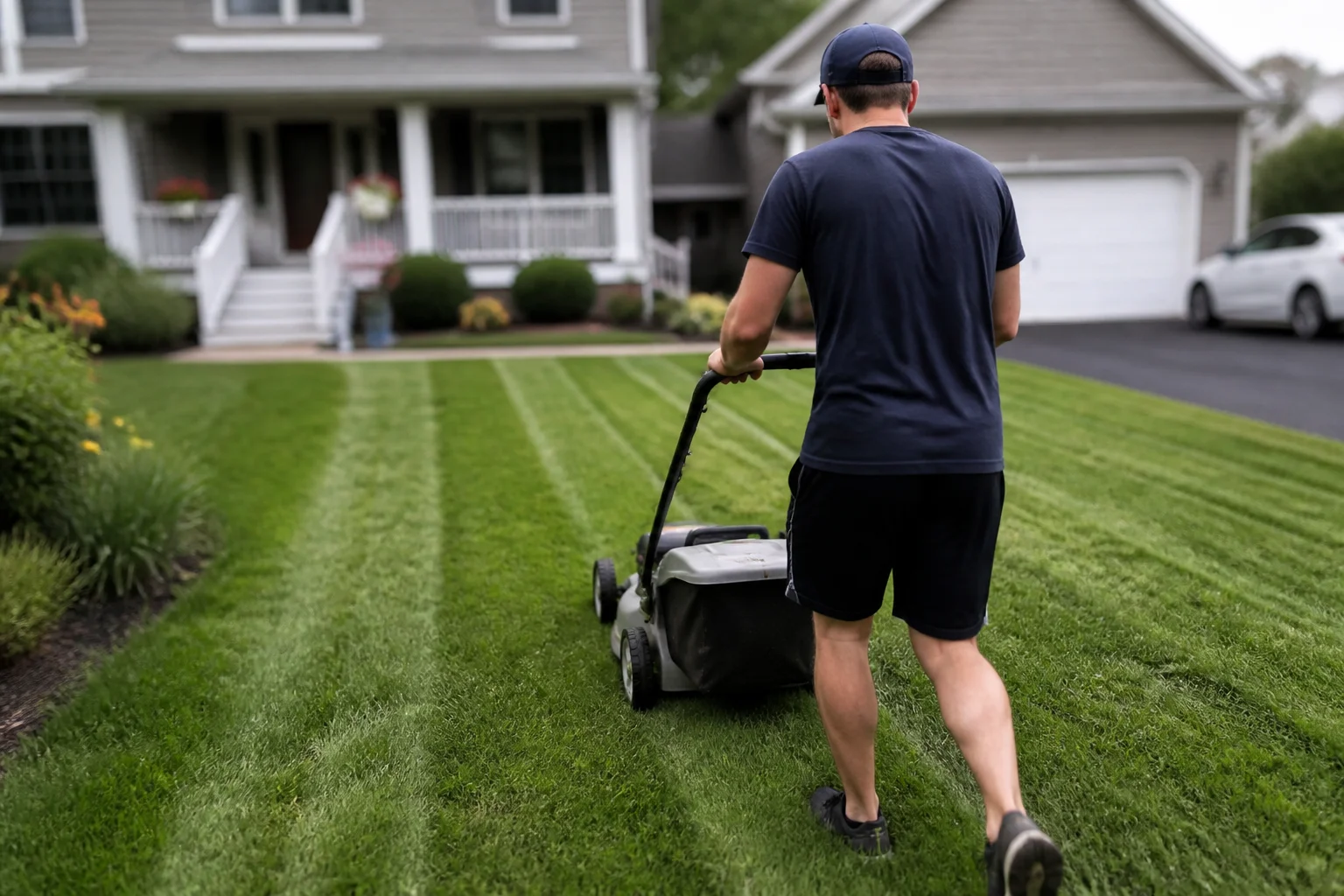
The battery-vs-gas argument is over for small yards and still alive at the half-acre line. Here's the honest crossover math — and the platform decision that matters more than the mower.
In this article:
- The crossover math
- The platform decision (again, because it's the decision)
- Self-propelled: who actually needs it
- Deck size, mulching and the boring truths
- Key takeaways
- FAQ
The crossover math
Under ~¼ acre: battery wins outright — instant start, no gas cans or winterizing, half the noise (evening mowing without neighbor diplomacy), and modern packs finish the yard with charge to spare. ¼–½ acre: battery works with a second battery or an 80V+ platform; be honest about tall-grass weeks, which halve runtime claims. Beyond ½ acre or rough/thick turf: gas (or a battery rider) still earns its maintenance ritual — sustained torque and refuel-in-30-seconds matter at that scale.
The platform decision (again, because it's the decision)
A battery mower is a down payment on a brand's ecosystem — the same packs should run your trimmer, blower and chainsaw, which is where cordless yards get cheap. Compare tool catalogs and solo-battery prices before the mower itself; the best mower on the wrong platform costs more within two years. Kit math: the two-battery bundle is nearly always the right buy, and voltage marketing (40V/56V/80V) matters less than watt-hours in the box and the platform's breadth.
Self-propelled: who actually needs it
Push mowers are lighter, cheaper and fine for flat eighth-acre lots — battery mowers especially, being 20lbs lighter than gas equivalents. Self-propelled earns its price on slopes, thick turf, and any yard where mowing feels like cardio you didn't order — rear-wheel drive climbs better than front. It also drains batteries faster; that's part of the runtime honesty. Try the drive speed control in person if you can — bad speed controls make walking awkward, and it's the #1 self-propelled complaint.
Deck size, mulching and the boring truths
- Deck width: 20–21" is the standard-yard default; wider cuts time but fights gates and sheds.
- Mulch, don't bag: mulching feeds the lawn and empties nothing — bag only when leaves or seed heads demand it; a mower that mulches well (reviews say) beats one with a big bag.
- Cut height rule: never more than a third of the blade at once — scalping stresses grass into weeds; sharp blades yearly beat every fertilizer argument.
- Storage: battery mowers fold vertical in half a shed slot — a quiet quality-of-life win renters and small garages notice.
Key takeaways
- Under ¼ acre: battery, decisively. Past ½ acre or rough turf: gas still earns it.
- You're buying a battery platform — compare the tool catalog before the mower.
- Self-propelled is for slopes and thick turf; rear-wheel drive climbs best.
- Mulch by default, cut a third max, sharpen yearly — the lawn cares more than the badge.
FAQ
Are battery mowers as good as gas now?
For typical suburban yards, yes — quieter, zero-maintenance, instant-start, and plenty powerful. Gas holds the line at large lots, thick weedy growth and all-day cutting.
How long do mower batteries last per charge?
Real-world: 30–60 minutes of cutting for standard packs — a ¼ acre comfortably. Claims assume dry, short, easy grass; tall-grass weeks halve them.
Is self-propelled worth it?
On slopes and thick turf, absolutely. On a small flat yard with a light battery mower, it's cost and battery drain for a stroll you didn't mind.
When should I mow after rain?
Ideally after the grass dries — wet clumps clog decks and stress cuts, and battery mowers feel it most. If you must, raise the deck and slow down.
Keep reading
Pressure Washers: PSI, GPM and What Your Driveway Needs →Cordless Drills: What Voltage You Need and Battery Platform Truth →
Not sure which one to buy?
Vic's benches: real Amazon & Walmart listings, live prices, honest verdicts.
Ask Vic →