Humidifiers: cool vs warm mist, and the white-dust thing nobody warns you about
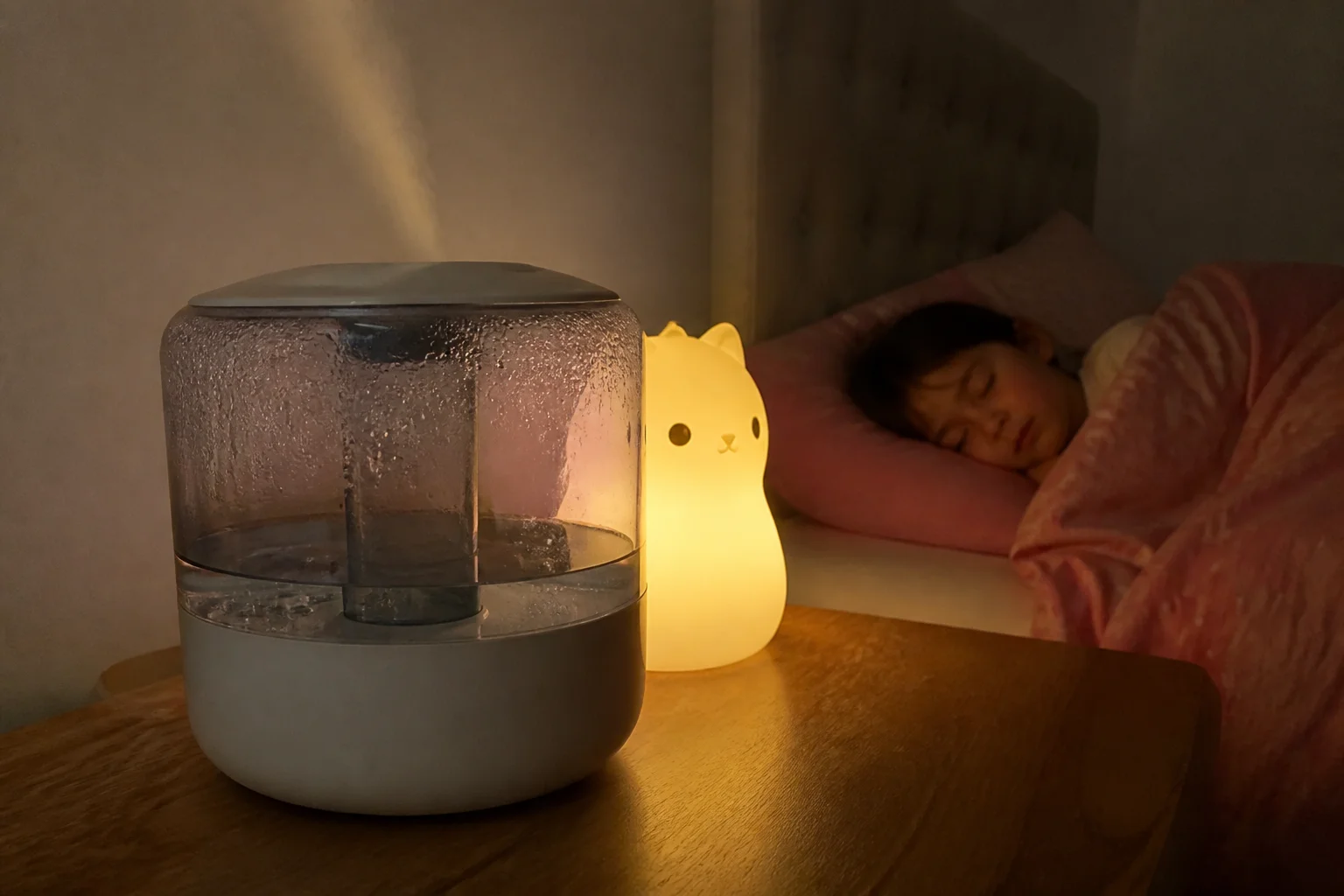
Winter heating drops indoor air to desert-dry, and the fixes are cheap — but the humidifier aisle hides real differences behind identical marketing. Here's the honest map, including the white-dust surprise.
In this article:
- The two technologies that matter
- White dust: the ultrasonic surprise
- The 30-second cleaning truth
- Sizing and the 40–60 target
- Key takeaways
- FAQ
The two technologies that matter
Ultrasonic (most common): a vibrating plate makes visible cool mist — near-silent, cheap to run, and the source of the white-dust issue below. Evaporative: a fan blows air through a wet wick — self-regulating (it physically can't over-humidify), no dust, slightly audible fan hum, wicks to replace. Warm-mist boils water into steam: cozy in winter, sterile output, but it's a kettle running all night — highest power draw and a burn hazard near kids. For nurseries, pediatric advice lands on cool mist every time.
White dust: the ultrasonic surprise
Ultrasonic units aerosolize everything in the water — including minerals. With tap water, that's the fine white film owners discover on every surface within a week, and those particles are also breathable. Fixes, in order of effectiveness: use distilled water (transformative, mildly annoying), use the demineralization cartridge if your model takes one, or choose evaporative — the wick traps minerals by design. Hard-water households should treat this as the deciding spec.
The 30-second cleaning truth
A tank of standing warm water grows things, and a dirty humidifier redistributes them into the air you're breathing all night — 'humidifier lung' is rare but real. The schedule that actually protects you: empty and dry daily (30 seconds), vinegar or dilute-bleach clean weekly (5 minutes). If a model's tank won't fit your hand or a brush, you won't clean it — wide-mouth tanks are a health feature disguised as convenience.
Sizing and the 40–60 target
Match tank/output to the room: 1–2L handles a bedroom overnight; 4–6L for living areas or all-day running. Target 40–50% relative humidity — below 30% is why your throat and skin complain; above 60% invites mold and dust mites. Run it a few feet off the floor, away from walls, and stop when windows start fogging — that's the over-shoot signal.
Key takeaways
- Nurseries and default choice: cool mist. Evaporative if your water is hard.
- Ultrasonic + tap water = white dust on everything; distilled water is the fix.
- Daily empty-and-dry, weekly vinegar clean — a dirty humidifier is worse than none.
- Target 40–50% humidity; a cheap hygrometer or humidistat model ends the guessing.
FAQ
Cool or warm mist for a baby?
Cool mist, per pediatric guidance — same humidity benefit, no boiling-water burn risk near curious hands.
Why is white dust appearing everywhere?
Ultrasonic humidifier + mineral-rich tap water. Switch to distilled water, add a demineralization cartridge, or move to an evaporative model.
How often should I clean a humidifier?
Empty and air-dry daily; proper vinegar clean weekly. Standing water plus warmth grows exactly what you don't want aerosolized.
Can you over-humidify a room?
Yes — above ~60% you're growing mold and dust mites. Fogging windows are the tell; a humidistat or hygrometer keeps you at 40–50%.
Keep reading
Air Purifiers: What CADR Really Means and the Room-Size Math →Dehumidifier Sizing: What Pint Rating Your Space Needs →
Not sure which one to buy?
Vic's benches: real Amazon & Walmart listings, live prices, honest verdicts.
Ask Vic →