Dehumidifier sizing: the pint math for basements, bedrooms and damp
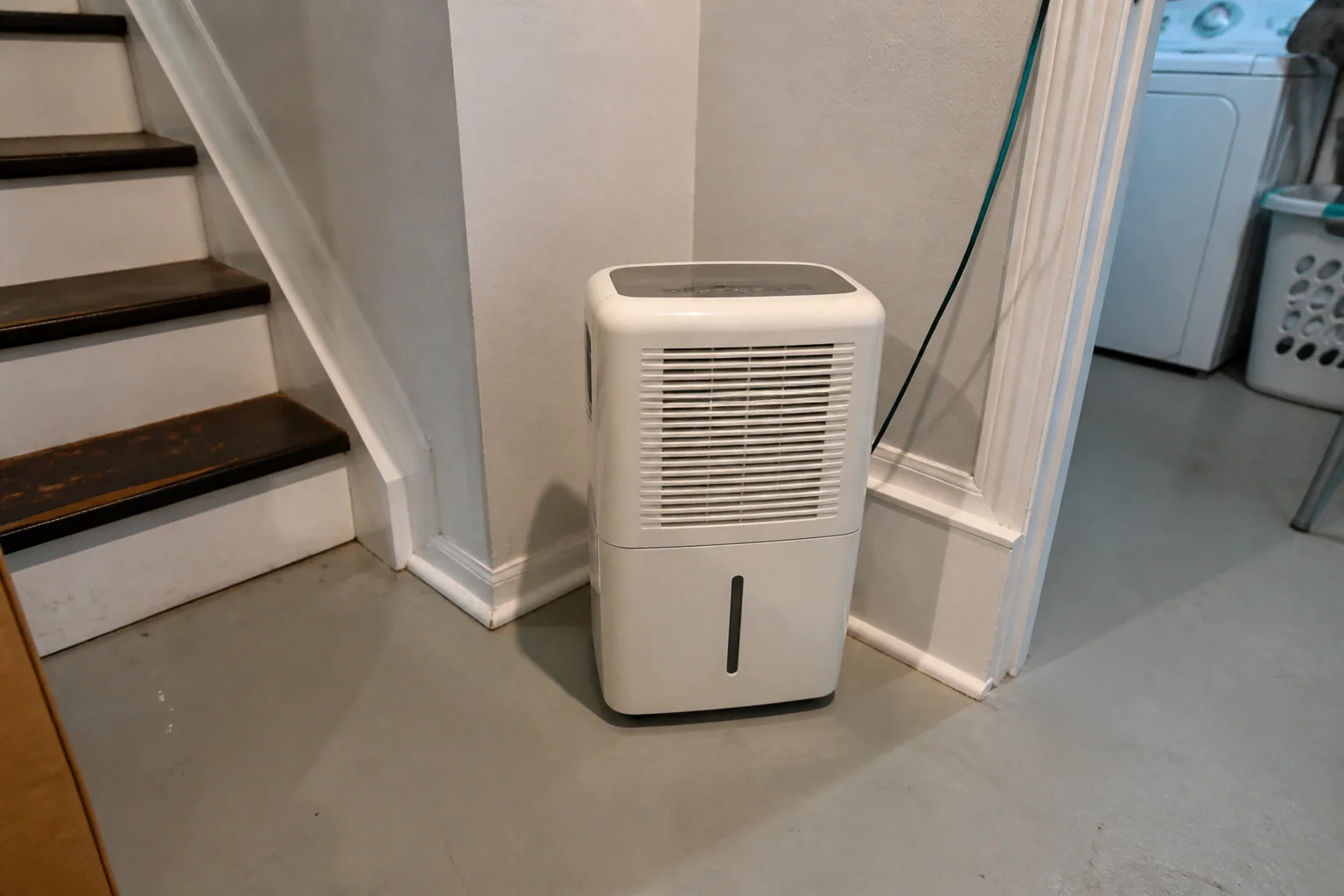
Dehumidifiers are sized in 'pints per day' — but the right size depends more on how damp the space is than how big. Here's the honest chart, and the drainage decision that matters more than capacity.
In this article:
- Dampness first, square feet second
- The bucket decides your relationship with it
- The settings that save money
- What a dehumidifier can't fix
- Key takeaways
- FAQ
Dampness first, square feet second
| Space condition | ~500 sq ft | ~1,000 sq ft | 1,500+ sq ft |
|---|---|---|---|
| Feels slightly musty | 20–22 pint | 25–30 pint | 35 pint |
| Visibly damp / condensation | 25–30 pint | 35 pint | 50 pint |
| Wet floors / standing moisture | 35 pint | 50 pint | 50 pint + fix the water source |
When in doubt, size up: a bigger unit cycles gently and quietly while an undersized one runs flat-out forever and still loses. Note the ratings changed in 2019 — a 'new 35-pint' equals an 'old 50-pint,' which is why grandma's basement unit sounds bigger than yours.
The bucket decides your relationship with it
Capacity is what it can remove; the bucket is what you'll live with. A damp basement fills a bucket daily — miss a day and the unit shuts off, and the damp returns. If there's a floor drain or sink anywhere nearby, run the gravity drain hose and never think about it again. Basement below the drain? A pump model lifts water up to a sink. This single choice predicts whether the machine still runs in a year.
The settings that save money
Target 45–50% relative humidity — dry enough to stop mold and dust mites, cheap enough to maintain. Chasing 35% costs real electricity for no extra benefit. Use the built-in humidistat, run it on auto, and in cold basements pick a unit with auto-defrost, or it'll ice its coils and dry nothing all winter.
What a dehumidifier can't fix
It manages moisture in the air; it can't beat water coming through walls. Efflorescence (white mineral bloom), rusty baseboard nails or a bucket that fills twice a day every day are signs of a water-entry problem — gutters, grading, or sealing — that no appliance out-runs. Dry the air and stop the source.
Key takeaways
- Size by dampness first; when torn, go bigger — it runs less, quieter.
- A drain hose (or pump model) is the difference between set-and-forget and daily bucket duty.
- Target 45–50% RH on auto; below that is wasted electricity.
FAQ
What size dehumidifier for a basement?
Most typical damp basements (600–1,200 sq ft) are happiest with a 35-pint (new rating) unit draining by hose. Go 50-pint for visible dampness or bigger footprints.
Should a dehumidifier run all the time?
On auto at 45–50%, it cycles as needed — that's the design. Continuous flat-out running means it's undersized, iced up (check defrost), or fighting a water-entry problem.
Why does my dehumidifier fill so fast?
Early weeks are the machine drying out walls, floors and stored fabric — normal. Months later, still filling daily? Air sealing or water entry deserves a look; the unit is treating a symptom.
Do dehumidifiers help with allergies?
Meaningfully — dust mites and mold both need humidity above ~50%. Holding 45–50% is one of the more effective whole-room allergy plays, alongside an air purifier for particles.
Keep reading
Air Purifiers: What CADR Really Means and the Room-Size Math →Portable Power Stations: How Many Watts You Actually Need →
Not sure which one to buy?
Vic's benches: real Amazon & Walmart listings, live prices, honest verdicts.
Ask Vic →