Flat irons: plates, temperatures, and the damage math nobody does
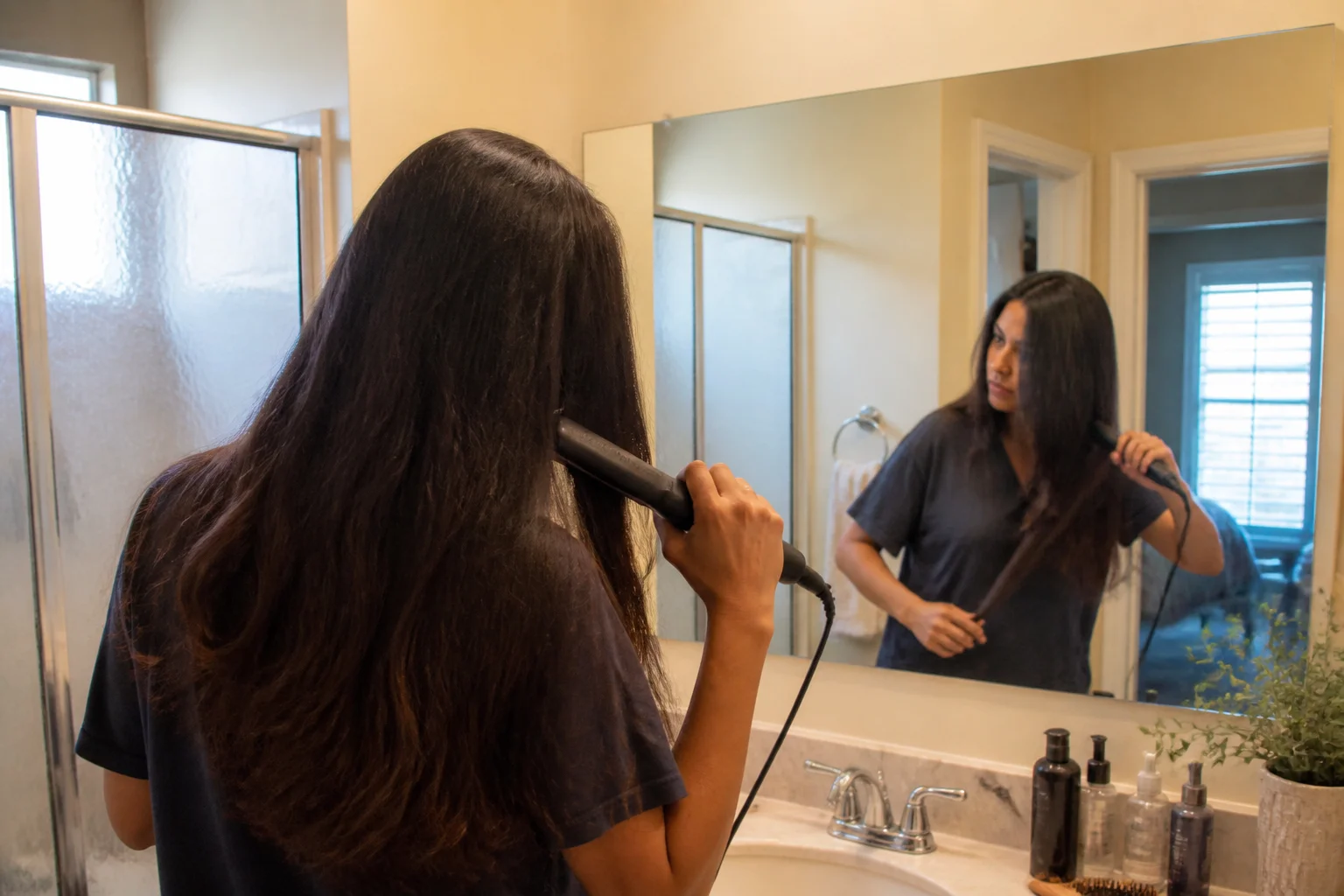
Straightener damage isn't about owning hot plates — it's about how many passes at what temperature. Here's the plate-material truth and the one-pass principle that changes everything.
In this article:
- Plates: ceramic vs titanium, honestly
- The temperature nobody should default to
- The one-pass principle in practice
- What the premium irons actually buy
- Key takeaways
- FAQ
Plates: ceramic vs titanium, honestly
Ceramic (or ceramic-coated): heats evenly, glides gently, forgiving — the right default for fine, damaged or normal hair. Titanium: transfers heat faster and harder — the pro pick for thick, coarse or resistant hair that laughs at ceramic, and overkill that over-cooks fine hair. Tourmaline is a ceramic finish that adds smoothing ions — nice, not transformative. The real quality tell isn't the material name; it's plate evenness — cheap irons have hot spots that force extra passes, and extra passes are the damage.
The temperature nobody should default to
Max buttons go to 450°F because salons sometimes need it for keratin treatments — not because your Tuesday requires it. Honest ranges: fine or color-treated hair 250–300°F, normal 300–350°F, thick/coarse 350–400°F. The trick that actually protects hair: find the lowest temperature that works in one pass — one pass at 350°F does less damage than three at 300°F, which is the math nobody does. Digital displays beat dial guesswork; that's a spec worth having.
The one-pass principle in practice
One-pass straightening needs: dry hair (ironing damp hair boils it — the sizzle is steam damage), small sections (bigger than the plate width = guaranteed re-passes), a slow steady glide, and heat protectant spray (it genuinely buffers — the one styling product with receipts). If a section needs three passes, the section's too big or the iron's too cold — fix those, not by cranking to max.
What the premium irons actually buy
Those are real. What's marketing: 'infrared', 'nano-silver', and most 'floating plate' bragging (basic floating is standard now).
Key takeaways
- Ceramic for fine/normal hair, titanium for thick/coarse — evenness matters more than material.
- Find the lowest one-pass temperature; one hot pass beats three cooler ones.
- Dry hair, small sections, heat protectant — the sizzle is your hair boiling.
- Premium buys even plates and heat recovery; 'infrared' and friends are decoration.
FAQ
What temperature should I straighten at?
The lowest that works in one pass: fine/colored 250–300°F, normal 300–350°F, thick 350–400°F. 450°F is a salon treatment setting, not a default.
Titanium or ceramic flat iron?
Thick, coarse, resistant hair: titanium. Everyone else: ceramic — gentler and even. When unsure, ceramic.
Why does my hair sizzle when straightening?
It's damp — the sizzle is water boiling inside the strand, which is real damage. Fully dry hair only, always.
Do expensive straighteners damage hair less?
Indirectly yes: even plates and stable heat mean fewer passes at lower temperatures. The physics of hot plates is the same — technique still does most of the protecting.
Keep reading
Hair Dryer Buying Guide: Ionic, Ceramic and Why Watts Lie →Sonic vs Oscillating Electric Toothbrushes: What Dentists See →
Not sure which one to buy?
Vic's benches: real Amazon & Walmart listings, live prices, honest verdicts.
Ask Vic →