Portable power stations: sizing watts for blackouts and camping
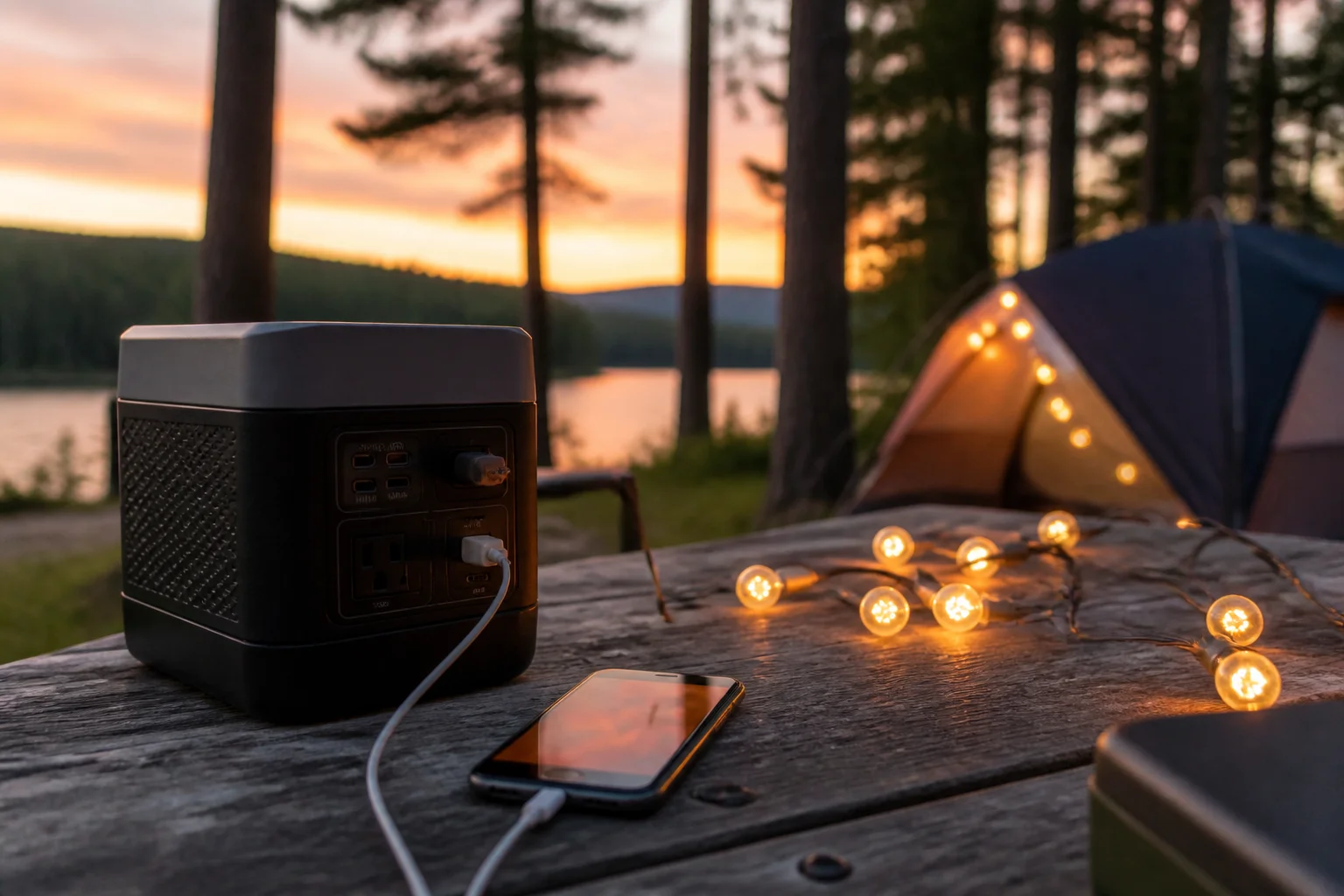
Power stations are sold by big scary numbers; blackouts and campsites run on small honest ones. Here's the watt-hour math for what you actually want to keep running.
In this article:
- The only two numbers that matter
- Real loads, real math
- The surge trap
- Chemistry is the longevity spec
- Key takeaways
- FAQ
The only two numbers that matter
Watt-hours (Wh) is the tank — how much energy is stored. Watts (W) is the tap — how much it can deliver at once. A 1,000Wh / 1,500W unit runs a 100W fridge for about 9 hours (batteries deliver ~85–90% of rated Wh) and can start it too. Everything else on the spec sheet is garnish.
Real loads, real math
| Device | Draw | Per night/day |
|---|---|---|
| Phone charge | ~15Wh each | trivial |
| CPAP (no humidifier) | 30–60W | 300–500Wh/night |
| Full-size fridge | 100–200W cycling | 1,000–1,500Wh/day |
| Camp fridge | 40–60W cycling | 400–600Wh/day |
| Laptop + lights + router | ~80W | 600Wh/evening |
Sizing rule: add your must-run loads for the duration you care about, then buy 25% more than the math says — cold weather and battery aging both shave real capacity.
The surge trap
Motors (fridges, pumps, power tools) gulp 2–3× their running watts for a second at startup. A fridge that runs at 150W may spike to 900W — a station rated 500W continuous will fault even though the 'math' fit. Check the surge/peak rating against your biggest motor, not the running number.
Chemistry is the longevity spec
LiFePO4 (LFP) packs are rated for 3,000+ cycles to 80% health — a decade of regular use — versus 500–800 for older NMC packs. LFP is heavier per Wh, and worth it for anything you'll own years. This is the quiet spec that separates the bench picks from the bargain bin. Solar input is the other one worth checking: a 200W panel meaningfully refills a 1kWh unit on a sunny day, turning a blackout box into an off-grid system.
Key takeaways
- Wh is the tank, W is the tap — size both, ignore the rest.
- Add must-run loads, then buy 25% headroom for cold and aging.
- Check surge watts against your fridge — motors spike 2–3× at startup.
- LiFePO4 chemistry = 3,000+ cycles; it's the longevity spec that matters.
FAQ
What size power station runs a refrigerator overnight?
A full-size fridge cycles 1,000–1,500Wh per 24 hours, so a 1,000Wh unit covers a night comfortably and a 2,000Wh unit covers a full day — provided its surge rating clears the compressor start.
Can a power station run a CPAP?
Easily — 300–500Wh per night without the heated humidifier (turn it off; it triples the draw). A 500Wh unit is a solid one-night CPAP insurance policy.
Power station vs gas generator?
Stations are silent, fume-free and indoor-safe; generators refuel in minutes and deliver more sustained watts per dollar. For outage insurance in an apartment or for camping, station. For days-long outages powering a whole home, generator (outdoors, always).
How long do power stations hold a charge in storage?
Quality units lose a few percent a month. Store at 50–80%, top up quarterly, and LFP chemistry will be ready years from now.
Keep reading
Home Security Cameras: Wired vs Wireless vs Doorbell Explained →Coolers: Do Expensive Rotomolded Ones Actually Keep Ice Longer? →
Not sure which one to buy?
Vic's benches: real Amazon & Walmart listings, live prices, honest verdicts.
Ask Vic →