Dash cams: what actually matters (it isn't the resolution)
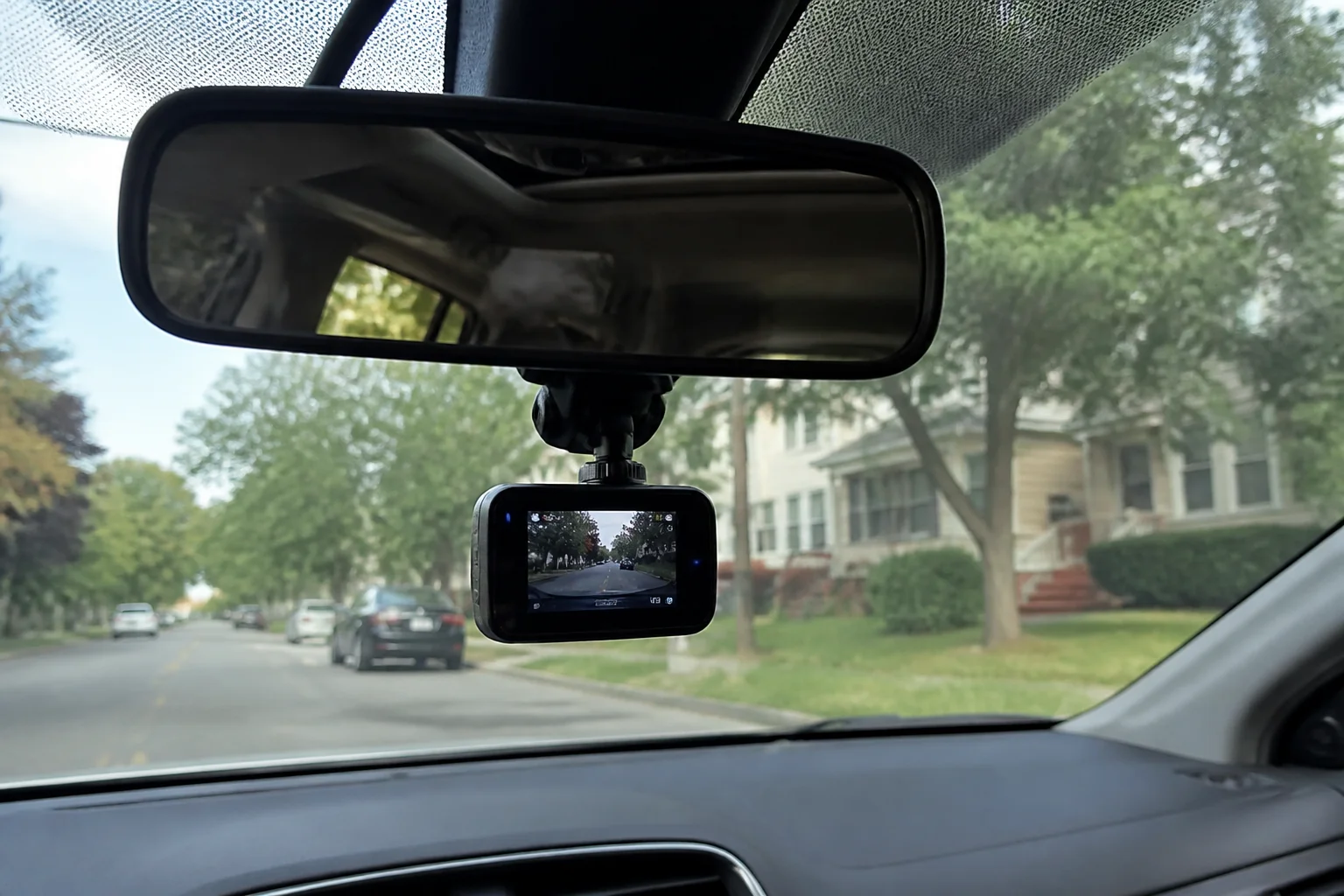
A dash cam has exactly one job: producing a readable plate on the worst day of your driving year. Here's which specs serve that job — and which are just numbers.
In this article:
- Resolution vs the night test
- Parking mode: read the fine print
- The memory card is the silent killer
- Heat, capacitors and front-vs-dual
- Key takeaways
- FAQ
Resolution vs the night test
4K reads plates farther away in daylight — real advantage. At night, everything depends on the sensor and processing: a good 1440p cam with a modern low-light sensor (and sane exposure that doesn't blow out headlights) beats a cheap 4K every time. The test that matters is a plate under streetlights at 30mph, and it's exactly the clip spec sheets never show. That's what the bench tests.
Parking mode: read the fine print
'Parking mode' on the box can mean three different things: impact-triggered wake (buffered cams catch the seconds before the bump — the ones without buffering record only the aftermath), motion detection (fills cards with pedestrians), or time-lapse (the storage-friendly compromise). All of them need power while parked — either a hardwire kit with battery-protection cutoff, or a cam with its own small battery/supercap. If you park on the street, this feature set is the actual reason to spend more.
The memory card is the silent killer
Dash cams overwrite video constantly — a workload that destroys ordinary microSD cards in months and produces corrupted files you discover only when you need the clip. Use 'High Endurance' rated cards, format them in-camera monthly, and replace every couple of years. Half of 'my dash cam stopped working' reviews are card failures wearing the camera's blame.
Heat, capacitors and front-vs-dual
Windshields hit 160°F in summer parking. Supercapacitor cams shrug at heat; lithium-battery cams age fast and swell in hot climates — prefer supercaps if you park outside. On channels: a front-only cam documents most disputes; a dual (front+rear) settles the rear-end and lane-change arguments that front cams can't. Interior-facing thirds are for rideshare drivers, not commuters.
Key takeaways
- Night sensor quality beats 4K bragging — demand the streetlight plate test.
- Buffered, hardwired parking mode is the real upgrade for street parkers.
- High Endurance microSD cards only; format monthly, replace every 2 years.
- Supercapacitor over battery in hot climates; dual-channel if rear disputes worry you.
FAQ
Is 4K worth it on a dash cam?
In daylight it reads plates meaningfully farther away. At night the sensor decides. A well-reviewed 1440p often beats a bargain 4K where it counts — after dark.
Do dash cams drain the car battery?
Parking mode without a proper install can. A hardwire kit with a voltage cutoff protects the start battery, and impact-only or time-lapse modes sip power versus continuous recording.
Are dash cams legal everywhere in the US?
Legal broadly, with two catches: windshield-mounting placement rules vary by state (some require corner or behind-mirror placement), and audio recording of passengers has consent rules in some states — mute the mic if unsure.
Will a dash cam lower my insurance?
US insurers rarely discount for one directly — the value is evidence: fault disputes, hit-and-runs and fraud claims resolve in minutes with footage that would otherwise be your word against theirs.
Keep reading
Home Security Cameras: Wired vs Wireless vs Doorbell Explained →Carry-On Luggage: Airline Size Rules and What Survives Baggage Handling →
Not sure which one to buy?
Vic's benches: real Amazon & Walmart listings, live prices, honest verdicts.
Ask Vic →