Bluetooth speakers: what actually makes one sound good
Speaker marketing is watts and adjectives; speaker reality is physics — moving air takes size. Here's how the good small speakers cheat physics, and where your money actually goes.
In this article:
- The physics you can't marketing around
- The size classes, honestly
- Specs that matter, specs that don't
- Where the money goes at each tier
- Key takeaways
- FAQ
The physics you can't marketing around
Bass is moved air, and moving air takes driver area and cabinet volume — which is why a soda-can speaker will never thump and a brick-sized one can. The cheats that work: passive radiators (the wobbling bass discs on good compact speakers) and DSP tuning that squeezes honest low-mids from small drivers. The cheat that doesn't: wattage claims — output numbers without size are noise. Rule: within a price tier, the physically larger speaker almost always sounds fuller.
The size classes, honestly
- Pocket/clip size: shower and handlebar duty — voice and treble, no real bass, and that's fine for podcasts.
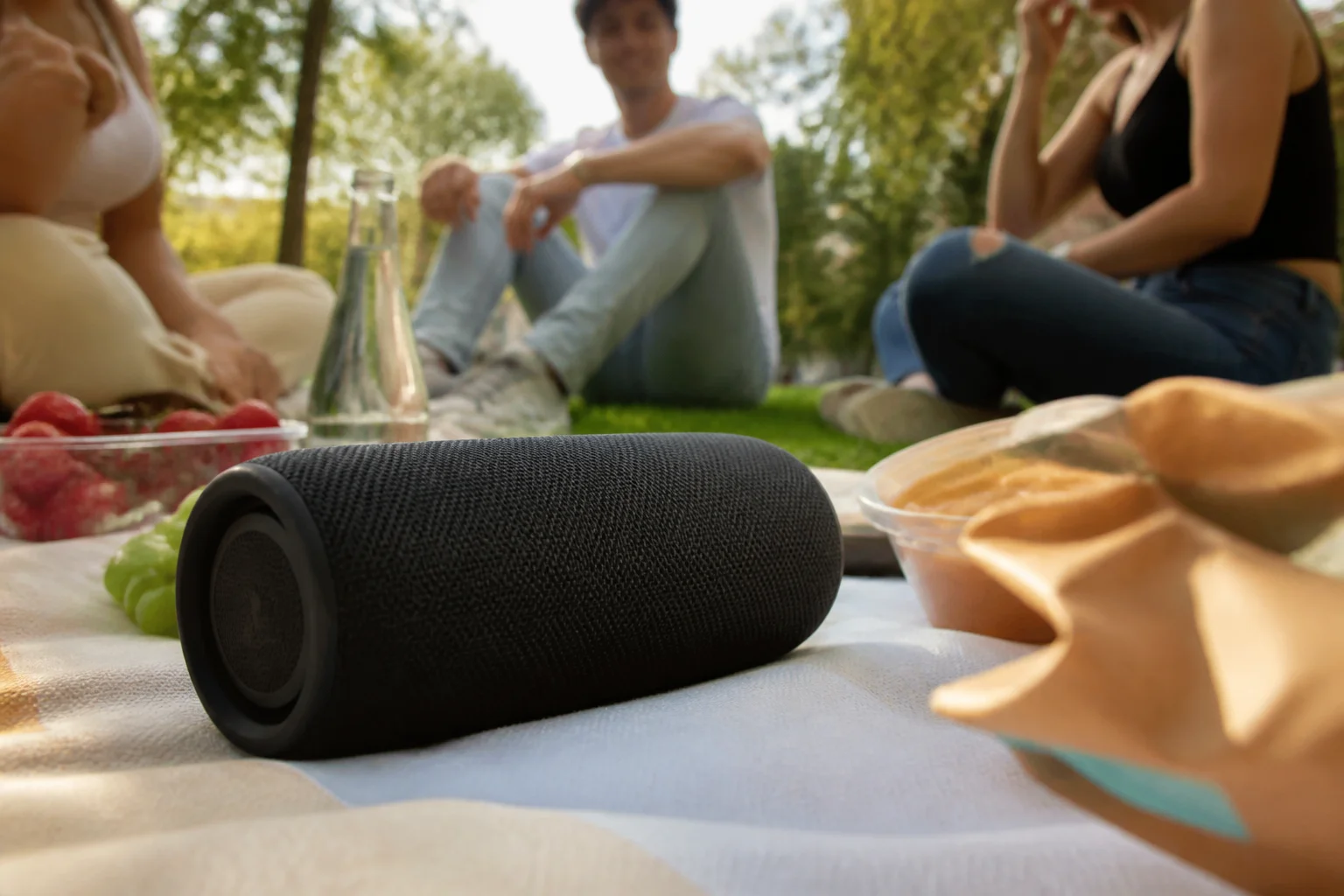
- Water-bottle size: the picnic sweet spot — real mids, hint of bass, 12+ hour batteries.
- Brick/loaf size: genuine bass arrives; fills a kitchen or patio properly. The best sound-per-dollar class.
- Party size: boom for the backyard — check real (not peak) battery claims at volume, which halve.
Specs that matter, specs that don't
Matters: IP67 waterproofing (dunk-proof — the difference between a speaker and a seasonal casualty; pool and beach owners, this is the spec), real-world battery at 60–70% volume (claims are measured at whisper level), and multi-speaker pairing if you'll ever want stereo. Doesn't: watts, 'HD audio' badges, and app EQs you'll set once. Codec talk (aptX etc.) is marginal on small speakers — tuning swamps it.
Where the money goes at each tier
The honest play for most: the water-bottle class for portability days plus a brick class for the kitchen counter, both bought on sale, still under one premium flagship.
Key takeaways
- Bigger box = fuller sound within any price tier; wattage claims are noise.
- IP67 dunk-proofing is the longevity spec for pool, beach and shower life.
- Battery claims are whisper-level; expect half at real volume.
FAQ
How many watts should a Bluetooth speaker have?
Ignore watts — they're inconsistently measured and don't predict loudness or quality. Size class and reviews at volume tell you what watts pretend to.
Are expensive Bluetooth speakers worth it?
What does IP67 mean?
Dust-tight and survives 30 minutes submerged — pool-drop proof. IPX4 handles splashes only. For outdoor life, IP67 is the spec that decides lifespan.
Can I pair two speakers for stereo?
Most brands pair two of the same model into true left-right stereo — a genuine upgrade for home listening and usually cheaper than one bigger speaker.
Keep reading
Soundbar Buying Guide: What 2.1, 3.1 and 5.1.2 Actually Mean →Power Banks: What mAh Really Means and the Charging Speed Trap →
Not sure which one to buy?
Vic's benches: real Amazon & Walmart listings, live prices, honest verdicts.
Ask Vic →