Mini fridges: the compressor vs thermoelectric split that decides everything
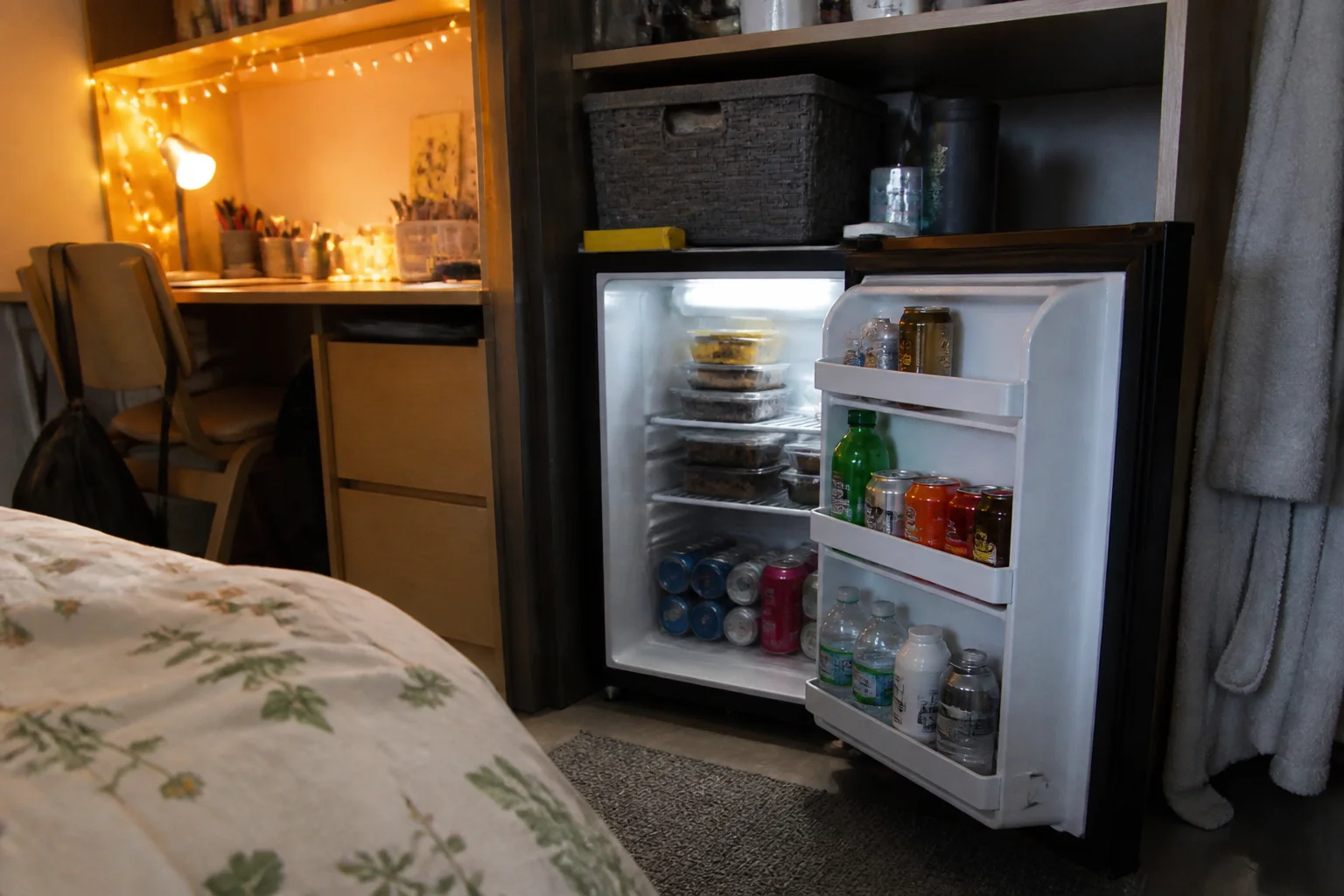
Two completely different machines share the mini-fridge shelf: real compressor refrigerators in small boxes, and thermoelectric coolers that only chill relative to the room. Knowing which is which decides whether your food is actually safe.
In this article:
- The split that matters: compressor vs thermoelectric
- Sizing by actual life
- The freezer compartment truth
- Noise, placement and running cost
- Key takeaways
- FAQ
The split that matters: compressor vs thermoelectric
Compressor minis are real refrigerators: they hold 35–38°F regardless of the room, some manage small freezer compartments, and they cycle on/off like the kitchen unit. Thermoelectric (Peltier) units cool a fixed ~35–40°F below ambient — in a 78°F dorm in May, that's a 45°F 'fridge' quietly growing things in your milk. Thermoelectrics are fine for drinks and skincare; anything perishable needs a compressor. The listing tell: thermoelectrics brag about silence and avoid printing actual temperatures.
Sizing by actual life
| Size | Reality |
|---|---|
| 1.7 cu ft | drinks, snacks, desk-side convenience |
| 2.5–3.3 cu ft | the dorm sweet spot: real groceries for one |
| 4.4+ cu ft | studio-apartment second fridge; garage drinks HQ |
Check door storage and can counts against your habits, and whether shelves remove to fit tall bottles — listed cubic feet include space real containers can't use.
The freezer compartment truth
The little freezer shelf inside cheap minis hovers around 15–25°F — soft-serve territory: fine for ice packs and this week's ice cream, wrong for months of frozen storage (that wants 0°F, which only separate-door mini-freezer designs approach). Auto-defrost is rare in minis: expect a twice-a-year manual defrost ritual when the frost beard grows, or shop specifically for frost-free models.
Noise, placement and running cost
Bedroom shoppers: compressor cycling is the classic sleep complaint — check dB specs (under ~40dB is polite) and reviews for 'gurgle' notes; thermoelectrics win silence, which is their honest niche for drinks-only bedside duty. Placement: minis need inches of breathing room and level floors, and carpet is fine but sockets shared with space heaters aren't.
Key takeaways
- Perishable food needs a compressor mini; thermoelectrics are drink coolers in disguise.
- 2.5–3.3 cu ft is the real-groceries dorm sweet spot; check door and can storage.
- Mini freezer shelves are ice-pack grade, not deep-freeze; expect manual defrost.
- For bedrooms, sub-40dB compressor or truly-silent thermoelectric for drinks only.
FAQ
Can a mini fridge keep milk safe?
A compressor model at 35–38°F, yes. A thermoelectric in a warm room, no — it can't reach food-safe temps in summer. Check the type before the milk.
Why is my mini fridge freezing everything?
Minis have crude thermostats and the coldest spot is usually against the back wall — nudge the dial warmer and keep produce out of the back corner.
How much does a mini fridge cost to run?
Thermoelectrics running constantly in warm rooms can actually cost more while cooling less.
Are mini fridges loud?
Compressor models hum and cycle (look under 40dB for bedrooms); thermoelectrics are near-silent — the one category they win outright.
Keep reading
Coolers: Do Expensive Rotomolded Ones Actually Keep Ice Longer? →Space Heaters: Safety Rules and What They Really Cost to Run →
Not sure which one to buy?
Vic's benches: real Amazon & Walmart listings, live prices, honest verdicts.
Ask Vic →