Coffee grinders: why burr beats blade, and what's actually worth spending
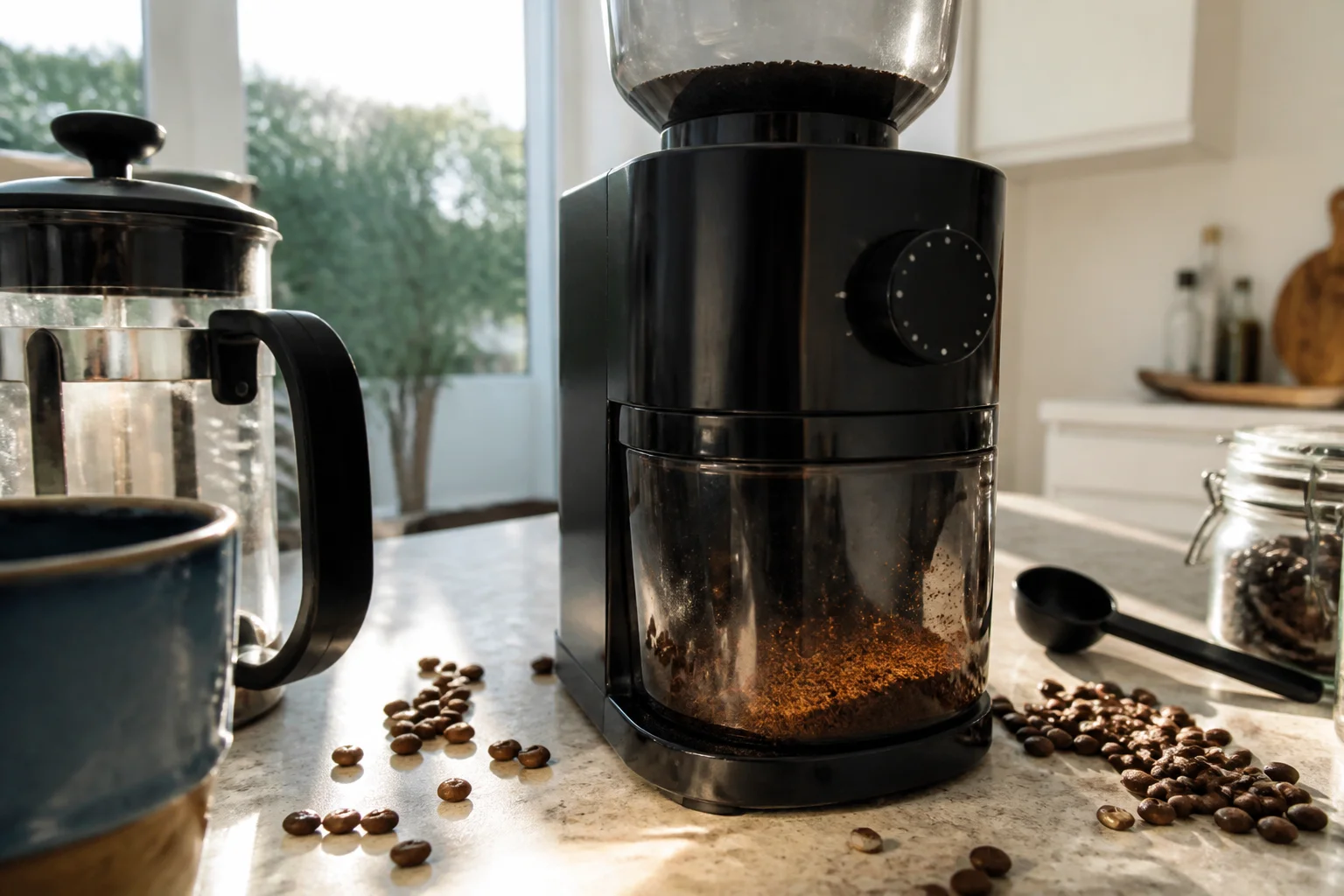
Upgrade order in coffee is settled science among people who taste for a living: fresh beans, then the grinder, then — distantly — the machine. Here's why the spinning blade fails, and what each price tier actually buys.
In this article:
- Why the blade grinder fails
- What each tier buys
- Espresso raises the stakes
- The freshness math that starts everything
- Key takeaways
- FAQ
Why the blade grinder fails
A blade grinder is a propeller in a cup: it doesn't grind to a size, it smashes randomly — boulders and dust in the same batch. Brewed together, the dust over-extracts (bitter) while boulders under-extract (sour), and you taste both at once, then blame the beans. Burr grinders crush beans between two surfaces at a set gap — uniform particles, even extraction, and suddenly the origin notes on the bag aren't fiction. It's the single most audible upgrade in home coffee.
What each tier buys
| Tier | What you get | Right for |
|---|---|---|
| real uniformity gains, plasticky build | drip and French press — a huge upgrade already | |
| better burrs, real settings, less mess/static | the pour-over sweet spot, entry espresso | |
| fine-grind precision and micro-adjustment | espresso people — where the stakes change | |
| shocking quality per dollar, arm labor | one-cup rituals, travel, budget excellence |
Espresso raises the stakes
For drip and press, a modest burr grinder is plenty — the methods forgive. Espresso forgives nothing: extraction happens in 25 seconds under pressure, where a hair of grind size separates sour from bitter, and 'stepless' micro-adjustment stops being jargon. This is why the classic advice holds: spend as much on the grinder as the espresso machine
The freshness math that starts everything
The reason grinding at home matters at all: ground coffee stales in days as aromatics gas off; whole beans hold for weeks. Pre-ground supermarket coffee arrived stale — no grinder fixes that, and no machine rescues it. The order of operations, forever: beans roasted within a month, ground within minutes of brewing, through burrs. Then — and only then — argue about machines. Cleaning note: burrs collect rancid oils; a monthly brush-out keeps the upgrade tasting like one.
Key takeaways
- Blade grinders smash randomly — dust plus boulders is why home coffee tastes muddled.
- Espresso: the grinder matters as much as the machine — budget them equally.
- Fresh beans ground at brew time beat any machine upgrade. That's the whole religion.
FAQ
Is a burr grinder really worth it?
It's the most audible upgrade in home coffee — even extraction instead of simultaneous bitter-and-sour.
What grinder do I need for espresso?
Are hand grinders any good?
The category's open secret: excellent burrs, no motor cost — quality that embarrasses electrics at twice the price, paid for in 60 seconds of cranking per cup.
How often should I clean my grinder?
Brush out the burrs monthly (weekly for oily dark roasts) — accumulated oils go rancid and quietly un-do your upgrade.
Keep reading
Espresso vs Drip vs Pod: The Real Cost Per Cup at Home →Electric Kettles: Speed, Temperature Control and What Matters →
Not sure which one to buy?
Vic's benches: real Amazon & Walmart listings, live prices, honest verdicts.
Ask Vic →