Electric kettles: what actually matters when they all boil water
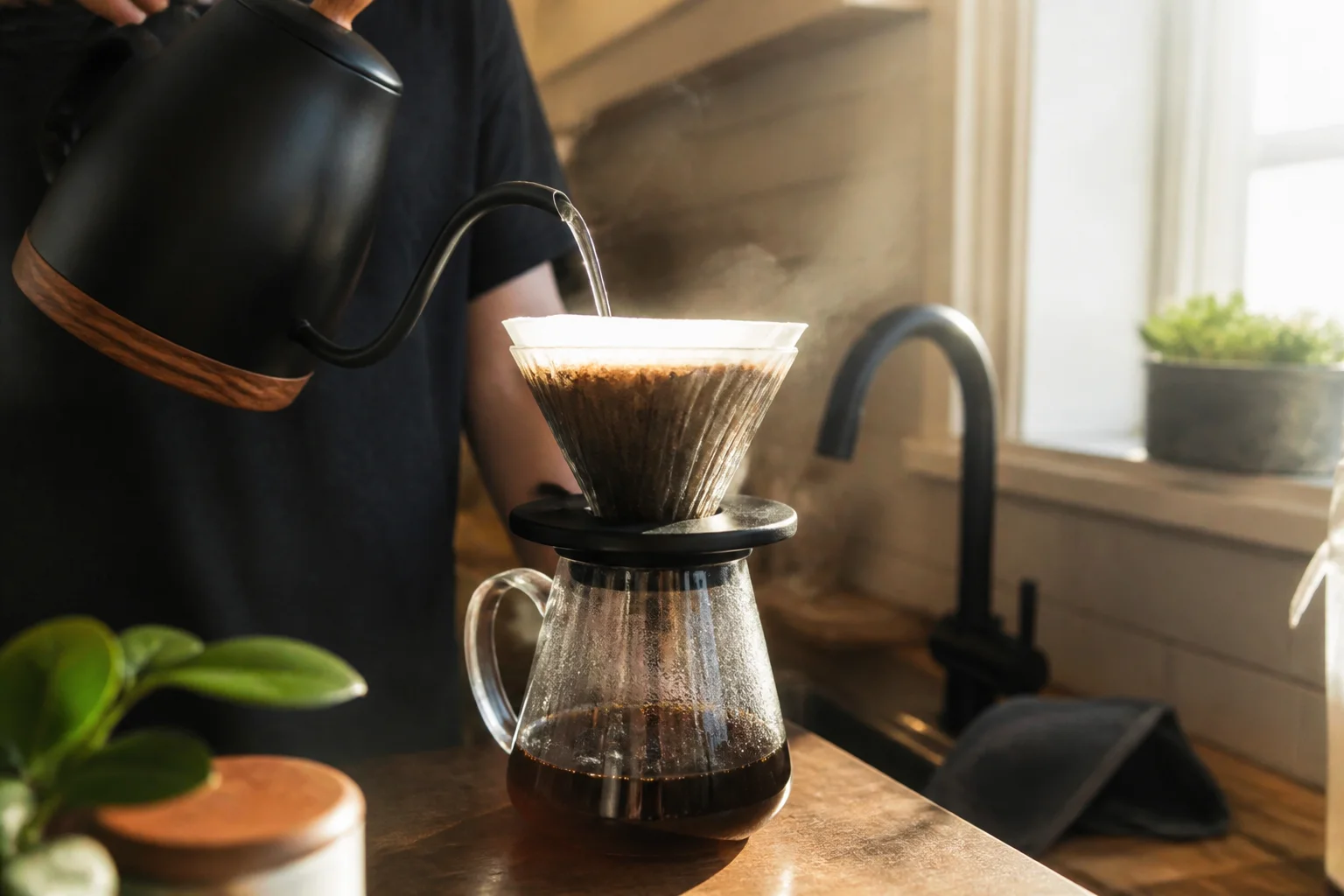
Every kettle passes the only test on the box: water gets hot. The differences that decide daily happiness live elsewhere — in the temperature dial, the lid, and the sound it makes at 6am.
In this article:
- The US voltage reality
- Temperature control: the feature that changes drinks
- Gooseneck or regular spout
- Materials, lids and the 6am details
- Key takeaways
- FAQ
The US voltage reality
American 120V outlets cap kettles around 1,500W — so US kettles boil slower than the 3kW monsters Britain enjoys, and 'rapid boil' claims between US models differ by seconds, not minutes (roughly 4–5 minutes for a full liter across the board). Speed is a wash; buy on everything else. (Still 2× faster than your stovetop, and more efficient.)
Temperature control: the feature that changes drinks
Boiling water scorches green tea and over-extracts delicate coffee. Variable-temperature kettles (170–212°F presets) are the upgrade tea and pour-over people actually feel: 175° for green, 185° for white, 200° for pour-over, boil for black tea and pasta water. If everything you make wants a boil, skip it guiltlessly.
Gooseneck or regular spout
The gooseneck exists for pour-over coffee — its thin controlled stream is the point, and if you hand-brew, it's essential. For everyone else it's slower to pour and smaller in capacity; the standard wide spout fills pots and mugs faster. Buy the spout for your actual counter, not the aesthetic.
Materials, lids and the 6am details
- Stainless interior is the durable default; glass looks great and shows scale honestly; avoid plastic touching hot water where you can.
- The lid test: wide opening you can fit a hand in = a kettle you can actually clean and descale; tiny flip-lids grow gunk.
- Quiet matters: some kettles roar; reviews mentioning 'quiet boil' are worth their weight at dawn.
- Auto-shutoff and boil-dry protection are standard — verify anyway on budget imports.
- Hard-water homes: descale monthly with citric acid or vinegar; scale is why kettles slow down and die.
Key takeaways
- US kettles all boil at similar speed (120V physics) — buy on control and build.
- Variable temperature transforms green tea and pour-over; boil-only lives are fine without it.
- Gooseneck = pour-over tool; wide spout = everything else, faster.
- Wide lids get cleaned; monthly descaling keeps hard-water kettles alive.
FAQ
Are electric kettles faster than the stove?
About twice as fast and more efficient — the element heats water directly instead of warming a burner and the kitchen.
What temperature for green tea?
~175°F — boiling scorches it into bitterness. This single fact sells most variable-temperature kettles.
Why is my kettle slow and crusty?
Limescale — it insulates the element. Monthly citric-acid or vinegar descaling restores speed and extends life, especially in hard-water areas.
Is a gooseneck kettle worth it?
For pour-over coffee, essential. For tea and general use, it's a slower pour with less capacity — charming, but the standard spout serves better.
Keep reading
Espresso vs Drip vs Pod: The Real Cost Per Cup at Home →Rice Cookers: Are the Expensive Ones Actually Worth It? →
Not sure which one to buy?
Vic's benches: real Amazon & Walmart listings, live prices, honest verdicts.
Ask Vic →