Cast iron vs nonstick vs stainless: the three-pan answer to everything
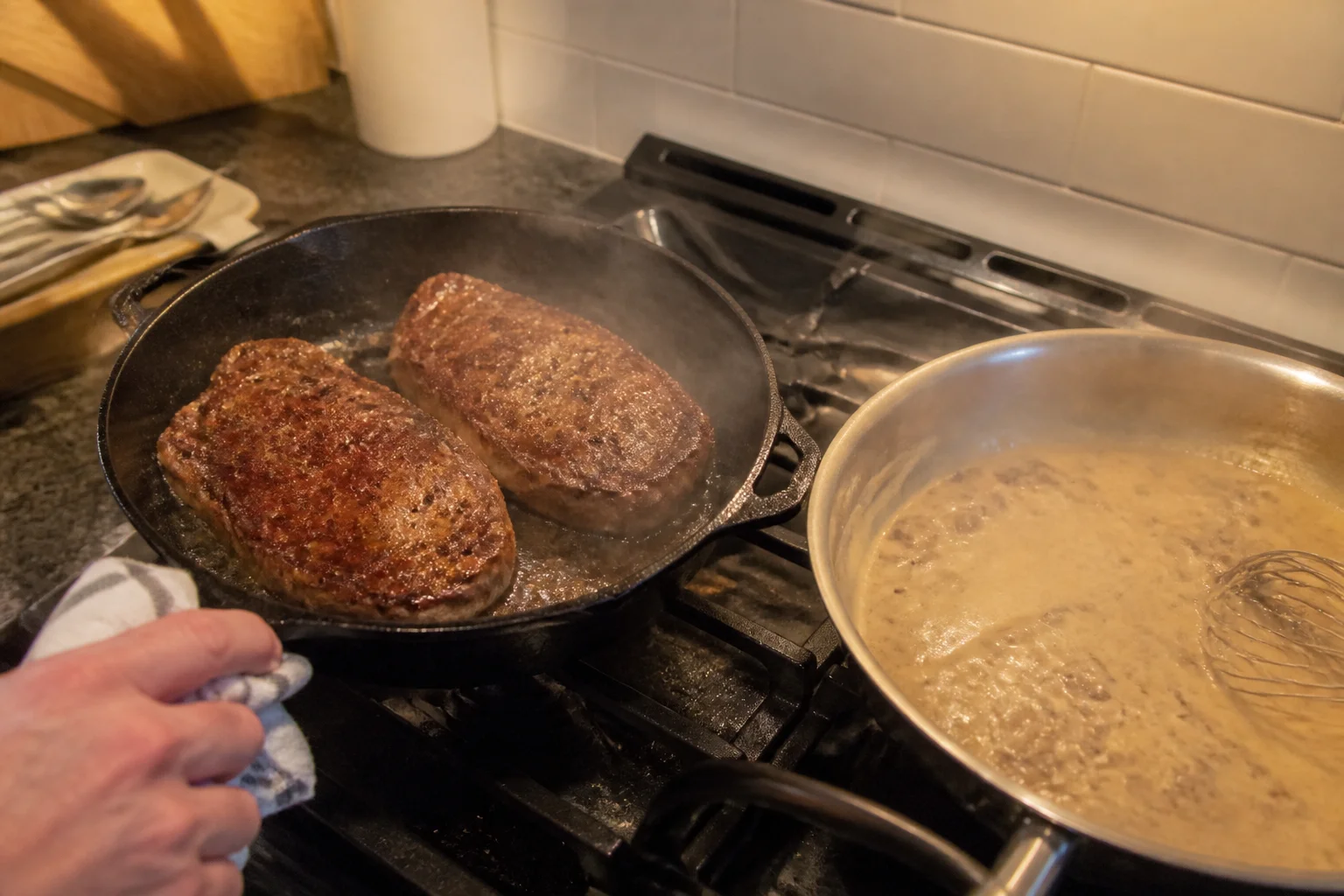
Cookware marketing sells the one pan that does everything. The kitchen truth is three pans that each do their thing brilliantly — and together cost less than one premium 'do-it-all' set.
In this article:
- The three-pan doctrine
- The nonstick truth: it's a consumable
- Cast iron myths, retired
- What to skip in the sets
- Key takeaways
- FAQ
The three-pan doctrine
- Nonstick skillet: eggs, pancakes, delicate fish — the low-and-medium-heat breakfast champion. Treat it as a consumable (below).
- Cast iron skillet:
- Stainless sauté/saucier: sauces, fond and pan-deglazing, acidic foods, anything needing precise response — the technique pan.
The nonstick truth: it's a consumable
Every nonstick coating — classic PTFE or 'ceramic' — degrades: 2–5 years of regular use for PTFE, often faster for ceramic despite the marketing. Nothing restores it.
Cast iron myths, retired
Modern seasoning care is easy: soap is fine (the old ban dates from lye-based soaps), water and immediate drying, a drop of oil after. It's not fragile — it's the opposite; thrift-store rust restores with an afternoon. Real limitations: slow to heat (preheat it properly), heavy, and acidic long-simmers (tomato sauce) strip seasoning — that's what the stainless is for. Enameled cast iron (Dutch ovens) adds the acid-proof braising piece; it's the legitimate fourth purchase.
What to skip in the sets
Boxed 12-piece sets bury two useful pans among six you'll never touch, in one compromised material. Skip: matching everything, tiny 'egg pans', and any set whose value is counted in lids. If a set tempts you, price its two genuinely useful pieces bought individually — the à la carte trio nearly always wins on both quality and money. Copper is beautiful and demanding; carbon steel is cast iron's lighter cousin and a great fourth pan for wok-ish and high-heat work.
Key takeaways
- Three pans — nonstick (eggs), cast iron (sear), stainless (sauce) — beat any one-material set.
- Nonstick is a 2–5 year consumable at every price; buy mid-range and replace guiltlessly.
- Cast iron: soap is fine, rust is fixable, tomatoes go in the stainless.
- Skip 12-piece sets; buy the trio à la carte for less than one premium set.
FAQ
Is expensive nonstick worth it?
No — coatings die on the same schedule at every price. Mid-range from a reputable brand, treated gently, replaced when sticky, is the whole strategy.
Can you use soap on cast iron?
Yes — modern dish soap doesn't hurt polymerized seasoning. Dry immediately, wipe with a drop of oil, done. The no-soap rule is a museum piece.
Why does everything stick to my stainless pan?
Temperature technique: proper preheat, then oil, then food — and patience until it releases naturally. Stainless rewards technique; it isn't trying to be nonstick.
What about ceramic-coated pans?
Lovely at first, typically shorter-lived than PTFE despite greener marketing. Same consumable rules apply — mid-price, gentle care, replace when done.
Keep reading
Chef's Knife Buying Guide: Steel, Weight and Edge Explained →Electric Pressure Cookers: What They Actually Do Best →
Not sure which one to buy?
Vic's benches: real Amazon & Walmart listings, live prices, honest verdicts.
Ask Vic →