Tent buying guide: capacity lies, waterproof numbers, and the setup test
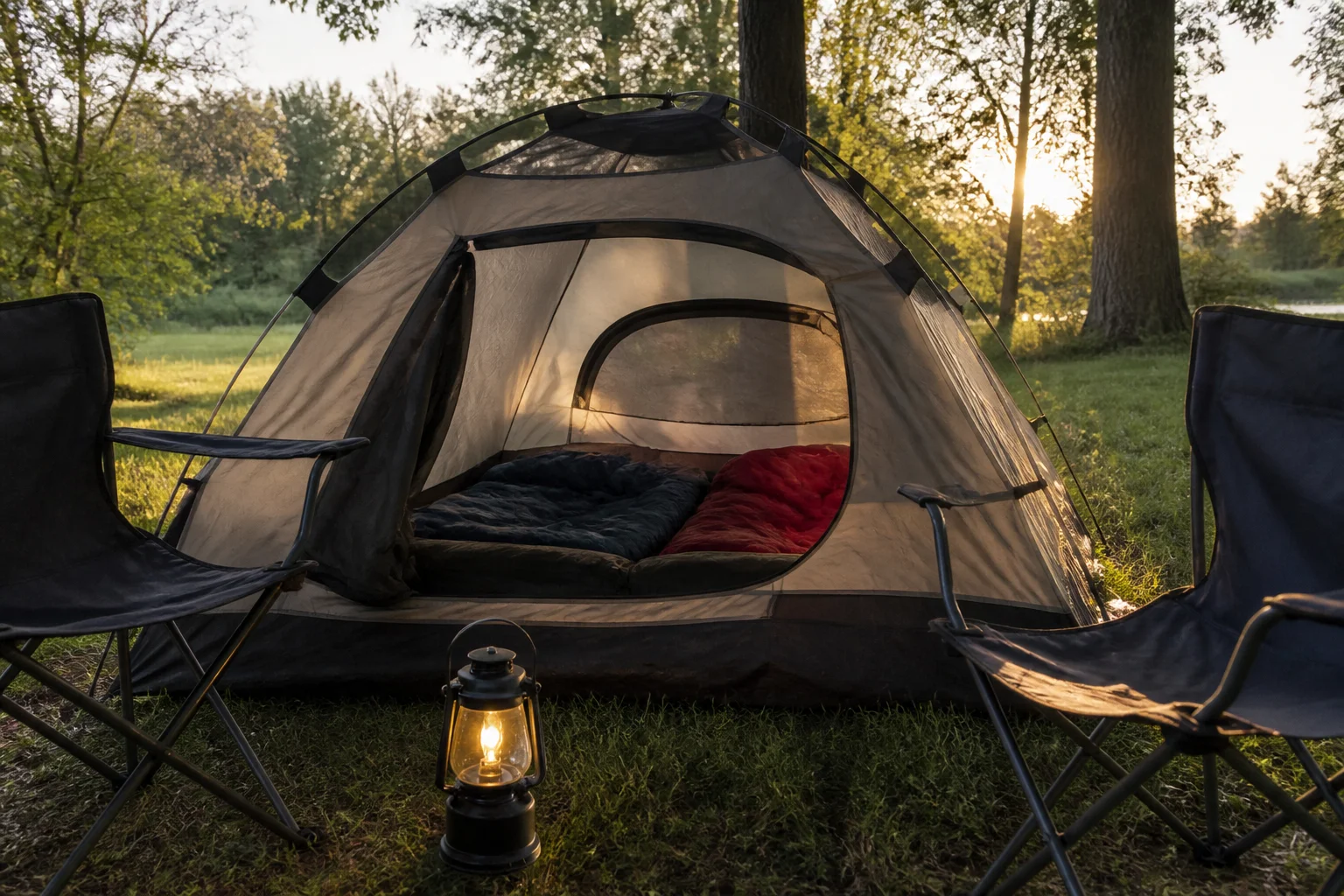
Tent capacity ratings assume campers sleep like sardines in a can with no bags. Here's how to read the specs the way experienced campers do — starting with dividing the person-number by two.
In this article:
- The capacity rule: divide by two
- Waterproofing: decoding the mm rating
- Condensation: the leak that isn't
- Setup time and the backyard test
- Key takeaways
- FAQ
The capacity rule: divide by two
Ratings count body-width mummy positions wall-to-wall — no gear, no air gaps, no rolling over. The lived reality: a '4-person' tent fits two adults plus gear comfortably; a '6-person' suits a couple with kids or three adults who like each other. Car campers should also check peak height (being able to stand while dressing transforms a wet morning) and floor dimensions against your actual sleeping pads — 'fits 4 pads' claims assume 20-inch backpacking pads, not the queen air mattress you're bringing.
Waterproofing: decoding the mm rating
Hydrostatic head (mm) measures how much water pressure fabric resists. 1,500mm handles normal rain; 2,000–3,000mm handles sustained wind-driven weather — the sensible target; floors want more (3,000mm+) because kneeling is pressure. Two things matter as much as the number: taped seams (unsealed stitching leaks first, always) and a full-coverage rainfly — the half-fly designs on budget tents are why 'waterproof' tents soak through the exposed walls. Re-waterproofing spray refreshes coatings but never fixes untaped seams.
Condensation: the leak that isn't
Half of 'my tent leaked' reviews describe condensation — two sleepers exhale a liter of water a night, and it condenses on cold single-wall fabric. The fixes are ventilation, not sealant: double-wall construction (mesh inner + fly), opening the vents even when it's cold, and not touching the walls with bags. A cheap single-wall tent in cool weather will 'leak' every night from the inside.
Setup time and the backyard test
Fewer poles and color-coded clips beat any claimed setup minutes — and 'instant' pop-up tents trade that speed for bulk, weight and wind fragility (fine for festivals, poor for weather). The non-negotiable ritual: pitch any new tent in the backyard first. You'll find missing stakes, learn the pole order, and seam-check it with a hose — every experienced camper has a first-pitch-in-a-rainstorm story they don't want you to repeat.
Key takeaways
- Divide the person-rating by two for real comfort; check peak height for car camping.
- Target 2,000mm+ hydrostatic head, taped seams, and a full-coverage fly — all three.
- Interior wetness in cool weather is condensation — ventilation, not sealant, fixes it.
- Pitch it in the backyard before any trip, and buy the footprint.
FAQ
What size tent for a family of 4?
A quality '6-person' dome fits four with gear; '8-person' if the kids are teens or you like elbow room. The '4-person' label is a two-adult tent.
Is a 1500mm waterproof rating enough?
For fair-weather and light rain, yes. For all-weekend-whatever-happens camping, 2,000mm+ with taped seams and a full fly is the safe floor.
Why is my tent wet inside when it didn't rain?
Condensation — your own breath on cold fabric. Open the vents, keep gear off the walls, and prefer double-wall designs in cool climates.
Are pop-up instant tents any good?
For festivals and calm-weather weekends, genuinely convenient. In wind and sustained rain their geometry and coatings give up first — traditional poles still win weather.
Keep reading
Coolers: Do Expensive Rotomolded Ones Actually Keep Ice Longer? →Portable Power Stations: How Many Watts You Actually Need →
Not sure which one to buy?
Vic's benches: real Amazon & Walmart listings, live prices, honest verdicts.
Ask Vic →