Blender vs food processor: which one your kitchen actually needs
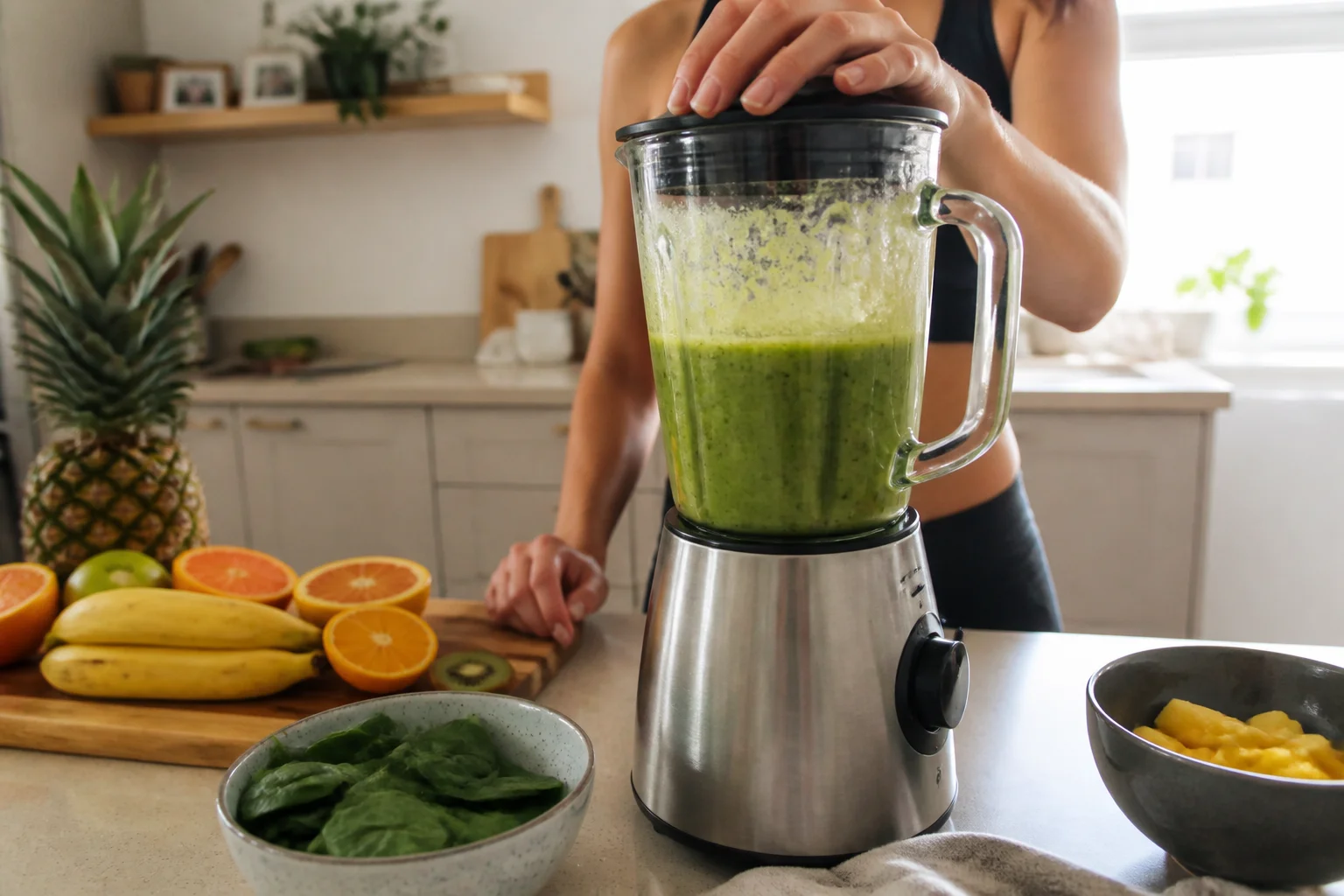
One spins liquid into smoothness, the other chops solids into pieces — and buying the wrong one is why so many end up in the donation box. Here's the honest split.
In this article:
- The one-sentence rule
- What blender wattage really means
- Personal blenders: the honest sweet spot
- If you can only buy one
- Key takeaways
- FAQ
The one-sentence rule
Liquids → blender. Solids → food processor. A blender needs liquid to create its vortex — smoothies, soups, sauces, frozen drinks. A processor's wide bowl and interchangeable blades chop, shred, slice and knead — salsa, slaw, dough, nut butters. They overlap about 20% and fail miserably at each other's core jobs: a blender turns onions to juice, a processor leaves smoothies gritty.
What blender wattage really means
| Tier | Handles | Reality |
|---|---|---|
| Under 500W | soft fruit, protein shakes | ice and frozen fruit will beat it |
| 600–1,000W | daily smoothies, ice | the sweet spot for most homes |
| 1,200W+ | frozen everything, nut butter, hot-blending soup | where the premium brands live — and last decades |
The premium tier's real advantage isn't watts, it's torque and build: they hold speed under load and survive daily abuse for 10+ years, which is how their per-year cost quietly beats cheap replacements.
Personal blenders: the honest sweet spot
If your entire use case is a daily smoothie for one or two, a good personal blender (blend-in-the-cup style) does the job for a fraction of the money and none of the cleanup. It's the highest-satisfaction, most-used appliance per dollar in the category. Buy full-size only if you're batch-making, hot-blending soups, or feeding a family.
If you can only buy one
Count your actual meals. Smoothie-and-soup households: blender, full stop. Chop-heavy cooks (salsas, slaws, doughs, grating cheese): processor. Genuinely both? Buy the blender first — its jobs are harder to fake by hand than chopping is — and add a processor when the knife work gets old. Combo machines exist; they do both jobs at about 70% quality, which suits light use and small kitchens only.
Key takeaways
- Liquids → blender, solids → processor. The overlap is smaller than the marketing implies.
- 600–1,000W covers most homes; premium buys torque and a decade of durability, not just watts.
- Daily solo smoothie = personal blender, the category's best value.
- One machine only? Blender first — hand-chopping is easier than hand-blending.
FAQ
Can a blender replace a food processor?
For wet jobs like salsa in small batches, partially. For dough, shredding, slicing and even chopping — no; the blender liquefies the bottom layer while the top sits untouched.
Are expensive blenders worth it?
If you blend daily or want frozen/nut-butter power, the premium tier's torque and 7–10 year warranties genuinely pay off. For occasional smoothies, the mid-tier is the value play.
What size food processor should I get?
7–9 cups suits most homes; 11+ for batch cooks. Undersized bowls overflow exactly when you're mid-recipe — size to your biggest regular job.
Can you blend hot soup?
Only in blenders rated for it (vented lids or heavy jars). Sealed cheap blenders + hot liquid = pressure and a painted ceiling. Check the manual line, not the reviews.
Keep reading
Espresso vs Drip vs Pod: The Real Cost Per Cup at Home →Air Fryer Sizes Explained: What Quart Capacity You Really Need →
Not sure which one to buy?
Vic's benches: real Amazon & Walmart listings, live prices, honest verdicts.
Ask Vic →